Magdalena de Kino
Sonora, Mexico
Kino's Trails End and Final Resting Place
Discovery of Kino's Grave - 60th Anniversary - 2025-2026
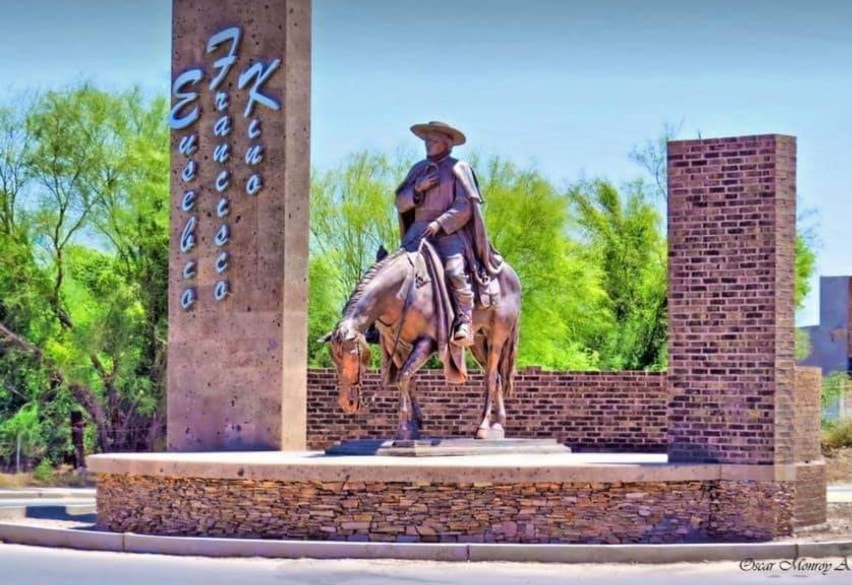
Padre on Horseback Kino Statue
Duplicate Statues in Segno and Tucson Oscar Monroy Avila - Photographer
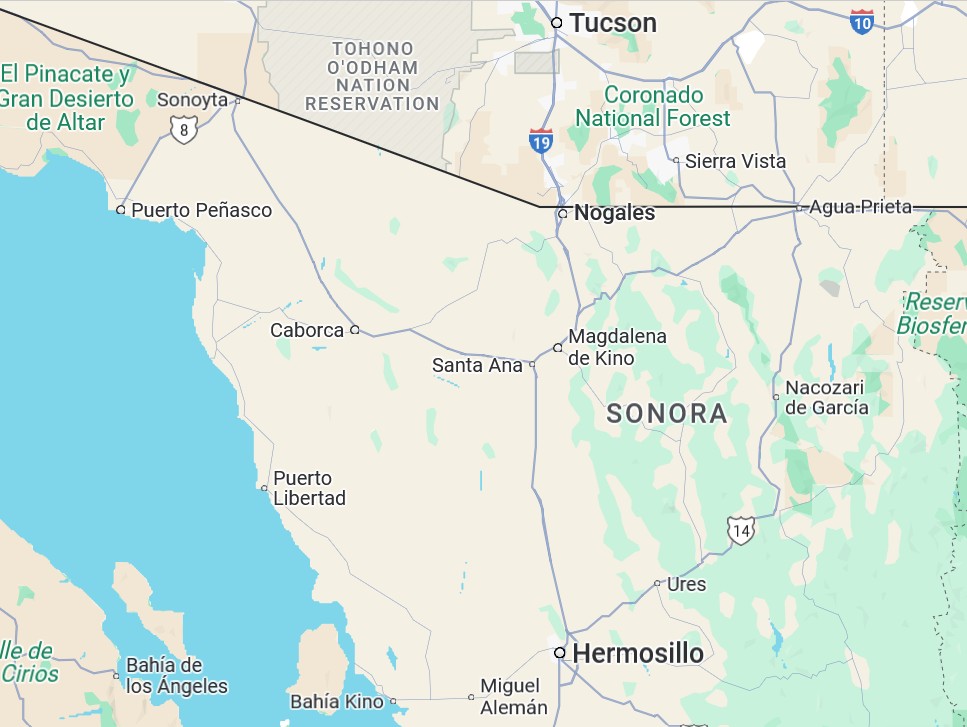
Magdalena de Kino
55 Miles South of the US-Mexico Border
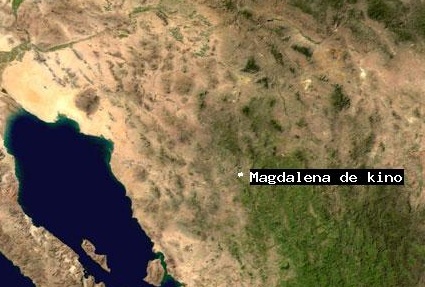
Magdalena de Kino
Westernmost Valley of Sonora's
Sky Island Mountain Serena Region
Gateway To The Gulf of California
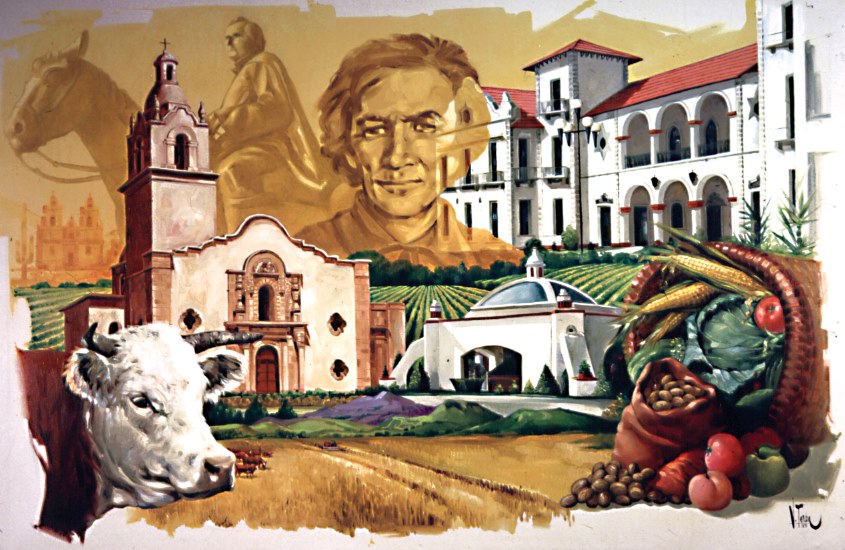
Magdalena de Kino
Vicente Terán Terán - Artist
For Information For Visitors,
See The Information for Visitors Section Towards Bottom of This Page
CORRESPONDING SUBJECT PAGE LINKS: Click on the links below to the corresponding subject pages that present Kino’s life and legacy in today's Magdalena de Kino. To view the corresponding pages, click pages: Magdalena Pilgrimage at https://www.padrekino.com/index.php/khs_home/kino-heritage/kino-magdalena-pilgrimage; Kino Grave Discovery: History - Page 01 at https://www.padrekino.com/index.php/khs_home/kino-heritage/kino-grave-discovery; Chapel Discovery - Page 2 at https://www.padrekino.com/index.php/khs_home/kino-heritage/kino-grave-discovery-chapel; Olvera Account - Page 3 at https://www.padrekino.com/index.php/khs_home/kino-heritage/kino-grave-discovery-olvera-account; Kino's Magdalena Town Plan and San Xavier Chapel at https://www.padrekino.com/index.php/khs_home/kino-life/kino-architect-builder
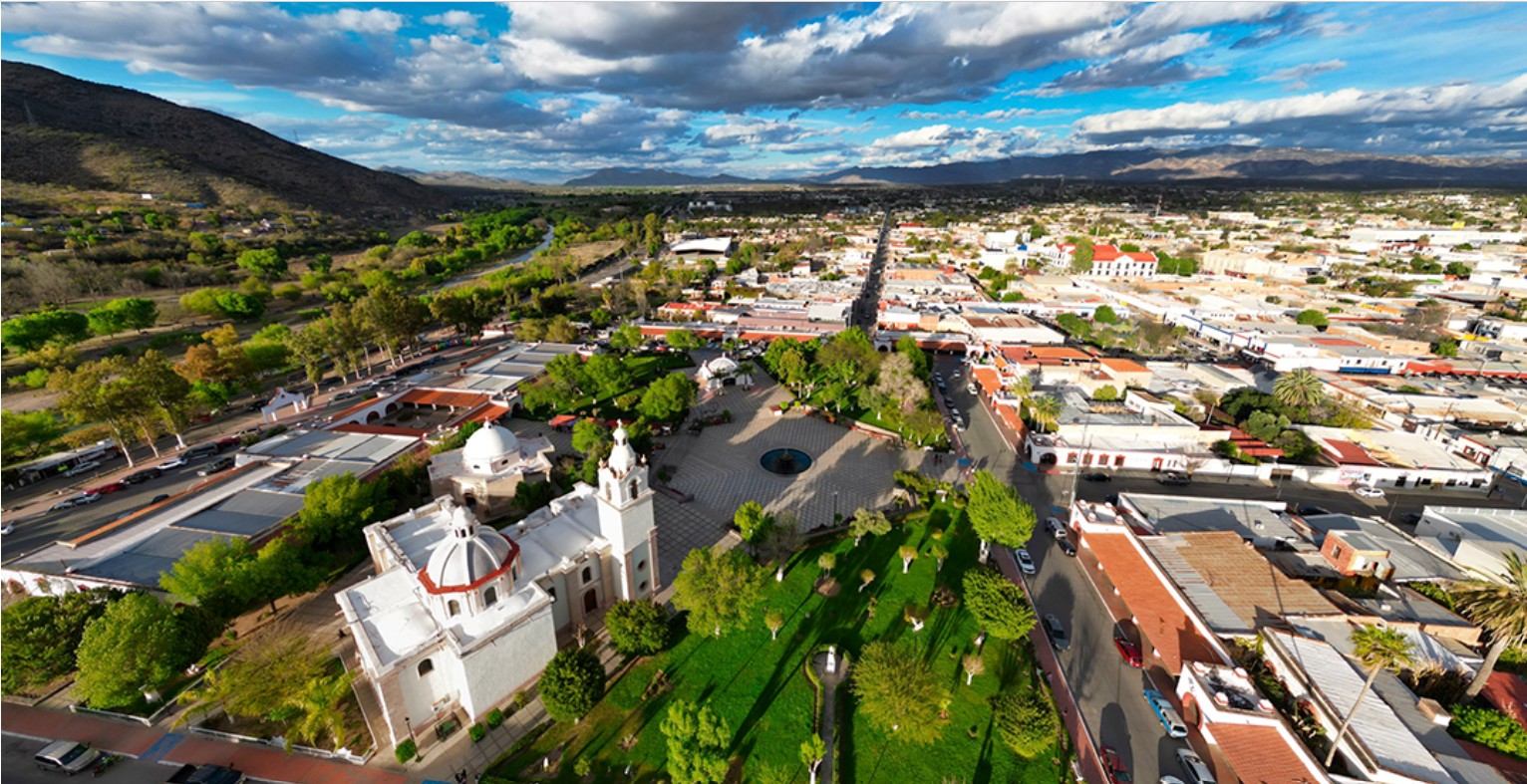
Kino Mausoleum (center)
Plaza Monumental Padre Eusebio Francisco Kino
National Monument of Mexico
Midge Pino - Photographer and Magdalena Cronista
Magdalena de Kino - The Gateway To The Heart and Soul of Mexico
Mark O'Hare
The municipality of Magdalena de Kino is the gateway to the heart and soul of Mexico. Its 35,000 inhabitants show their civic pride in their community with their renowned friendliness and their promotion of its rich culture and history.
Its people are very proud that their municipality has two Spanish colonial mission churches. The oldest church is in the village of San Ignacio that is 6 miles north of the town of Magdalena. The other beautiful church is in Magdalena that towers above the city's main plaza.
Municipalities in Mexico are similar to county governmental entities in the United States in that municipalities include both urban and rural areas. The area of the municipality of Magdalena de Kino is three-quarters the size of the U.S. state of Rhode Island. When I use the word Magdalena without identifying it as a municipality, I am usually referring to the city of Magdalena. I will specifically refer to the village of San Ignacio. Please note that it well worth a stop to see the charming village of San Ignacio and its picturesque mission church.
Magdalena is located 55 miles south of Nogales, Arizona, in a verdant river valley that is an oasis of farms in the Sky Island Mountain region of the United States and Mexico. Magdalena’s traditions, history and culture, both past and present, is a microcosm of that of Mexico.
The municipality's formal name of Magdalena de Kino was decreed in 1966 by the Sonora state legislature in recognition of the heroic life and enduring legacy of pioneer missionary and explorer Padre Eusebio Francisco Kino, S.J. (1645-1711) - an officially declared national hero of Mexico. Among the first four mission communities that Kino established in mid March 1687 are San Ignacio and Magdalena. After working 30 years in today's Sonora, Sinaloa, Arizona and the Three Californias, Kino died in Magdalena where he is buried. His grave is protected by a mausoleum in its main plaza.
For the visitor, Magdalena de Kino is a hidden gem that reveals the heart and soul of Mexico. For the traveler driving to other destinations, I highly recommend a visit to its main plaza. The plaza was designed by the architect who was famous for the restoration of the Spanish colonial center of Guanajuato that is an UNESCO World Heritage Site. In the plaza is the beautiful old mission church built in 1810 and the Kino Masoleum. The plaza is surrounded on all sides by four buildings with large arcades connecting shops and restaurants. Also there is an exceptional community museum. The restaurants serve delicious Sonoran cuisine whose field-to-table ingredients come fresh from nearby farms. And don’t forget that Magdalena’s cattle ranches provide the best beef served in all of Mexico.
The visitor can also make Magdalena a vacation destination where they can experience authentic Mexico - away from the usual crowded tourist attractions and big cities - less than a one hour via a scenic drive from the US-Mexico border. There are ample hotels and other accommodations for overnight stays.
Magdalena de Kino was designated as one of the first “Pueblo Magicos” of Sonora in 2012 by the Federal Government of Mexico. This designation was in recognition of Magdalena’s promotion of its rich cultural and historic heritage and its commitment to people-to-people tourism.
Magdalena is less than a two hour drive from Tucson and is accessed by a four lane divided highway. The municipality is the gateway to the Gulf of California and its desert beaches. It is also the gateway from the Western United States to the heartland of Mexico via Federal Highway 15 that runs parallel to the Pacific coast and then goes inland to Guadalajara and ends in Mexico City.
Magdalena’s natural environment is very similar to Tucson’s. It is located in a smaller valley but unlike Tucson, it still has extensive agriculture. Magdalena is surrounded by Sky Island Mountains with saguaros growing in their foothills. Also Magdalena’s climate is very similar to Tucson’s. Like Tucson, its late fall, winter and spring seasons have gentle sunny days and glorious star filled night skies. The summer can be hot but the mornings are pleasant and the day temperatures cool down very quickly after sunset. In the rainy season of July and August, there can be spectacular displays of lightning.
Most topics presented in this web page are focused on Padre Kino and his legacy. However, Magdalena has many other places of interests and events. Magdalena has many celebrations and events during the year including the late October Membrillo Festival in San Ignacio. There are also community dances with an occasional talent show on weekend nights in its main plaza. Culture matters in Magdalena.
Magdalena celebrates Kino's living legacy in two main annual events - the 300 year old Magdalena Pilgrimage and Fiesta in the Autumn and the Kino Festival in mid Spring.
In addition to Magdalena’s strong community identification with Padre Kino, Magdalena has a rich history that is a microcosm of all the historical eras of Mexico. Many of these historical events are remembered with Magdalena's preservation of its historical buildings. On this page I have referenced only a very few. It must be remembered that with the coming of the railroad in the 1880s, Magdalena was gradually replaced as the regional center of the borderlands of Northwest Mexico beginning with Nogales, Sonora, becoming the port of entry from the United States instead of Magdalena.
One historical event that gained international attention was in October 1974. U.S. President Gerald Ford made his first foreign visit as president by traveling to Magdalena to meet with President Luis Echeverria of Mexico.
I include on this web page the reminiscences of what life was like in 1862 Magdalena by Tucson's prominent citizen businessmen Fred Ronstadt (1862-1954) when he was age 14. Later that year teenage Fred would move to Tucson from Magdalena. In Fred's early years in Tucson, he was Tucson's outstanding musician and band leader. The rest of Fred's family would live in Magdalena for another 5 years. Fred is the grandfather of the famed singer Linda Ronstadt.
It also should be noted that among renowned born in Magdalena are Claudia Pavlovich Arellano, the first woman governor of Sonora, and Luis Colosio Murrieta, the leading candidate for the 1994 Mexican presidency before his was assassinated.
I would like to paraphrase from the text of a newspaper article that I found online with a few of my own additions about the heart and soul of Magdalena. “Magdalena de Kino is a deeply cherished place, loved for the peacefulness of its nights, the fragrance of its fruit trees, the kindness of its people, and the hospitality of its welcoming hosts .... It was with good reason, the great Jesuit missionary and proclaimed national “Hero of Mexico” Eusebio Francisco Kino came to his final rest and died in beautiful and loving Magdalena.”
For more information about visiting Magdalena, see Information for Visitors section toward the bottom of this web page.
Magdalena Pilgrimage And Fiesta - A 300 Year Tradition
Eusebio Francisco Kino for 30 years worked to fulfill his utopian vision of building new Christian communities with the Native people that he lived with. While ministering spiritually to them as a Catholic priest, Kino bettered their lives by bringing them European crops, cattle and other stock animals. He also taught them new skills using the European technologies that he introduced to them.
Kino wanted to build strong communities where Native people could survive European colonialism and co-exist and thrive in the changed world imposed by the colonists. Kino helped develop Native communities with self sufficient economies based on the sharing of communal property and promoted of the beginnings of self government.
Magdalena’s oldest living Kino tradition is over three centuries old. Currently more than 10 thousand pilgrims annually make a pilgrimage to Magdalena, traveling from all over Mexico and the United States. The pilgrims begin to converge on Magdalena in the middle of September in their act of faith and to enjoy its fiesta. The fiesta comes to an immediate end in the peaceful silence of the October 4th feast day of St. Francis Asissi.
The origins of the Magdalena pilgrimage began with Kino’s work. While Kino was living, the O'odham people walked year round to help the magnetic Kino with planting, harvesting and roundups at his many missions and ranches through out today's Arizona-Sonora borderlands. Also O'odham people would travel as much as 100 miles to help Kino construct his church buildings and later celebrate their dedication.
The last church dedication that the O'odham people celebrated with Kino was in Magdalena on March 15, 1711. While saying the celebratory Mass in dedication of the new chapel to his patron saint Francis Xavier, Kino collapsed. He would die a few hours later near midnight.
After Kino's death the O'odham people continued to walk from their homes throughout the Sonoran Desert to Magdalena and its San Francisco Xavier Capilla where Kino was buried. They traveled to honor the memory of the heroic and charismatic Kino, their steadfast defender and friend, and to pay homage to the other saints that Kino introduced that are also named named Francisco - Francis Xavier and Francis Assisi. Kino was also a Francisco. He was usually called by his Jesuit vow name of "Francisco" and not by his baptismal name of Eusebio.
It is fascinating that accounts of the Magdelena Pilgrimage and Fiesta were published or presented in lectures throughout Mexico, the United States and Europe as early as the later half of the 1800s.
More information about Magdalena Pilgrimage and Fiesta with history and personal accounts is on this page. Also click on https://www.padrekino.com/index.php/khs_home/kino-heritage/kino-magdalena-pilgrimage.
The Kino Festival - Celebration Of Music, Culture And Community
In May 1966, Kino's lost grave was discovered by a team of scientists and historians from the National Institute of Anthropology and History (INAH) of Mexico, the Arizona State Museum and the University of Arizona together with invaluable help of community cronistas from throughout Sonora and Arizona.
Today the grave site with Kino’s skeletal remains on display is protected by a mausoleum in the Plaza Monumental Padre Eusebio Francisco Kino, the city’s central plaza and a national monument of Mexico.
For almost 30 years, the discovery has been celebrated with the Magdalena Kino Festival that has been held annually in mid May. The festival is the 2nd largest cultural event in Sonora featuring a great diversity of exceptional performances and events. There is music including symphonic orchestras, opera divas, pop and rock groups and Native musicians. Dance performances include O'odham and Yoeme Yaqui traditional dances, folklorico and ballet. Also there are regional theater productions, local talent shows and sometimes a circus. Before and during the festival there are historic and cultural presentations, workshops and art exhibits.
More about the discovery of Kino’s grave is on this page and for greater detail about the discovery of Kino's grave, click on this website’s three pages starting with its first page at https://www.padrekino.com/index.php/khs_home/kino-heritage/kino-grave-discovery.
Mark O'Hare, Editor
Magdalena de Kino -The Gateway To The Heart and Soul of Mexico
Magdalena de Kino
End of Kino's Trails - Beginning of Kino's Enduring Legacy
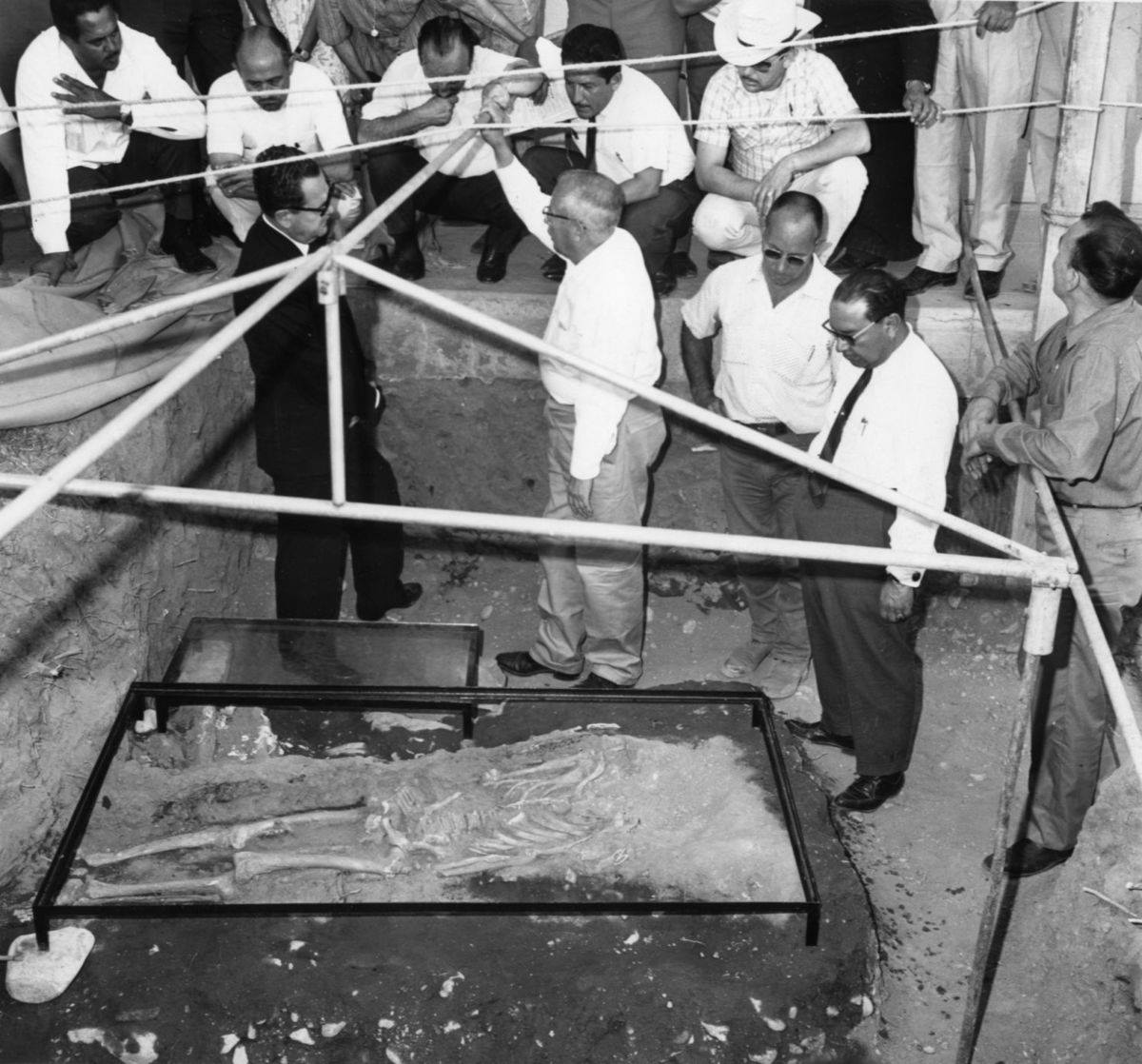
International Team of Scientist and Historians Discovery Kino's Skeletal Remains
May 19, 1966
Samuel Arreola - Photographer
Finding Father Kino
Bernard L. Fontana
On February 14, 1965, on the fifty-third anniversary of Arizona's admission to the union as a state, a larger-than-life-size bronze statue of Father Eusebio Francisco Kino was dedicated and presented as the last of Arizona's two representatives in the Rotunda of the United States Capitol. (The other is a statue of copper magnate John C. Greenway). Among the distinguished guests at the unveiling and dedication ceremony was the Honorable Hugo Margin, ambassador from Mexico. It was possibly the ambassador who alerted Mexican President Gustavo Díaz Ordaz that Americans were paying singular homage to a man who belonged as much to Sonora and Mexico as he did to Arizona and the United States.
Soon after, President Díaz Ordaz charged his Secretary of Public Education, Agustin Yáñez, with the task of locating and positively identifying Father Kino's mortal remains, a job which the secretary assigned on June 30 to Professor Wigberto Jiménez Moreno, head of the Department of Historical Research of Mexico's National Institute of Anthropology and History.
Beginning in August 1965, a half year after the statue's dedication, an international team of investigators headed by Jiménez Moreno arrived in Magdalena, where it was known Father Kino had died in 1711, to begin the search on the ground. It was a hunt that had gone on sporadically at least since 1922 when Bishop Juan Navarette tried without success to locate the grave site.
In addition to Jiménez Moreno, the principal investigators were Jorge Olvera H., an art and architecture historian with a background in archaeology; Arturo Romano P., physical anthropologist; Jorge Angula, archaeologist; Sonoran historians Fernando Pesqueira and Father Cruz Acuña; cartographer Conrado Gallegos; chemist Gabriel Sánchez de la Vega; and Americans William W. Wasley, archaeologist, and Father Kieran R. McCarty, O.F.M., historian.
As work proceeded, it became known from documentary and published sources that Father Kino had died at the age of sixty-five on the night of March 15, 1711, and had been buried on the Gospel side of the altar between the second and third ashlars (foundation stones) in the new chapel he had just dedicated to San Francisco Xavier. It was also learned that the year after Kino's death two other Jesuits were exhumed from their original burial places in Tubutama and their bones, in a jumble, were reburied on the Epistle and Gospel sides of the church. In 1739, Spaniard Salvador de Noriega was buried at the entrance to the chapel. and in 1837, José Gabriel Vega was buried beneath the nave. In 1828, Father José Pérez Llera had put a stone buttress next to part of the slumping east wall of the chapel.
As work in archives and libraries proceeded, so did work in the field. Members of the team looked carefully at the construction materials and techniques used at the ruins of Remedios, a church known to have been built by Father Kino. So did they examine the adobe walls and stone foundations at Cocospera and carry out excavations in Magdalena in places where earlier excavations had occurred, and where their own sense of the unfolding evidence took them.
Finally, it was Jorge Olvera and his expert reading of three nineteenth-century depictions of Magdalena - those by John Russell Bartlett (1852), John Ross Browne (1864), and Alphonse Pinart (1879) - that enabled the excavators to zero in on the most likely location of Father Kino's chapel. These drawings indicated the location of Father Agustín Campos's 1705 church in relation to the 1832 church of Father Pérez Llera (the one presently in use), and to Father Kino's chapel. The location of the latter proved to be in an area immediately next to the city hall.
On May 19, 1966, Father Kino's bones were found. He lay undisturbed on the Gospel side of the altar between the second and third ashlars precisely as he had been buried some 255 years earlier. Near him were the secondary burials of the two Tubutama Jesuits, and in the nave of the chapel and just beyond its entrance were the primary burials of 1739 and 1837. Father Pérez Llera's buttress was against the outside of the east wall. Examination of the skeleton, moreover, revealed a European male who was at least sixty years old, showed signs of arthritis (Kino had trouble writing and riding in his later years), and who, unmentioned in the documents, had lost two central incisors long before he died (the tooth sockets had grown over). His coffin was gone, but a simple cassock button remained on his breastbone and a small crucifix lay on his collarbone.
The discovery of Father Kino's remains transformed Magdalena. Its name is now officially Magdalena de Kino and the archaeological remains of Father Campos's early eighteenth-century church, was completely redesigned by architect Francisco Artigus and rebuilt in 1970 and 1971 as the beautiful memorial plaza seen there today.
Bernard L. Fontana
"Finding Father Kino"
"The Pimería Alta - Missions and More" 1996
To download the summary of the Finding Father Kino account written by Dr. Bernard L. Fontana in 1996, click Finding Father Kino Fontana.
Discovery of Kino's Grave
Barry M. Goldwater
For many years there had been a curious interest in locating the chapel in Magdalena, Sonora, in which Father Agustin Campos reported that he had buried Father Kino following his death on March 15, 1711. As early as 1928 Dean Lockwood had made preliminary explorations in Magdalena in an effort to locate the chapel of San Francisco Xavier which Kino had dedicated only hours before his death. Mexican scholars in following years uncovered many old foundations in the town, but none of their excavations yielded confirmation as being the burial place of Father Kino or fitted descriptions of the chapel. The Lions' Club of Magdalena, as a civic effort, had supported some such explorations. Among Mexican savants remembered for such efforts were Professor Serapio Davila, Professor Eduardo E. Villa, Professor Fernando Pesqueira, and Senor Ruben Parodi. Their work, although not directly successful, helped to narrow the area of exploration for later, effective archeological studies. ...
By the end of July of 1965 instructions had been issued that sent a team of technical experts to Sonora for the purpose of "locating the remains of Father Kino, and, in that eventuality, of proving their authenticity." Dr. Eusebio Davalos Hurtado, director of the National Institute, |13| assigned Professor Jimenez Moreno and Professor Jorge Olvera, who had been trained at Santa Clara University as an architect and archeologist, to the task. In Sonora they enlisted generous support and assistance through the keen interest shown in the endeavor by Governor Luis Encinas.
The weeks of August and September of 1965 were spent by the team in explorations in several parts of Magdalena, including a so called chapel site which, upon excavation, was revealed by details of construction to be of the Franciscan period, possibly a century following the death of Kino. Excavations during this period were extended into the public plaza of Magdalena, between the extant church and the Municipal Palace. A number of foundations were uncovered, but none completely fitted the pattern outlined in Father Campos' description of the chapel which had become the sepulcher for Father Kino. In late September, at the season when Papago Indians and other Catholic faithful in Pimería Alta make an annual pilgrimage to Magdalena to celebrate the birthday of San Francisco Xavier, work was suspended.
It was resumed in April of 1966, but not until important developments had taken place. In the previous summer's work the Mexican team had been assisted by Dr. William Wasley, State Archeologist attached to the Arizona State Museum at the University of Arizona. Dr. Wasley also had been consulted some years before on earlier excavations at Magdalena, at one time revealing that explorations were being made in material and fill laid down much later than the Kino period. Aside from being an experienced, well-trained archeologist, Dr. Wasley had the added attribute of being bilingual, which is a definite asset when, as in the case at Magdalena, much of the labor was being provided voluntarily by local residents.
Before the work resumed Professor Jimenez Moreno and his team also had enlisted the services of another American, Father Kieran McCarty, O.F.M., Catholic priest and Franciscan historian of Old Mission San Xavier del Bac near Tucson. ... For more than a year Father Kieran had been serving as pastor for a chain of small Catholic churches along the Altar River. His headquarters was at Altar, with subordinate churches at Tubutama, Oquitoa, and Saric. Thus his pastorate was the Kino country.
Father Kieran is a historian, assigned to the Southwestern field by the Academy of Franciscan History in Washington, D. C., and he has been working extensively in public and church archives on a history of the Franciscan period which began in Pimería Alta with the Jesuit Expulsion of 1767. Thus he already knew the church history of the Magdalena area, and like his friend Dr. Wasley, was entirely at ease in both Spanish and English. Furthermore, Father Kieran was thoroughly familiar with the holdings of the Arizona Pioneers' Historical Society in Tucson, he was acquainted with Kino traditions and burial records both in Mexico and those collected in the Bancroft Library at the University of California, and in his research had drawn upon church archives in Rome for additional material.
The Mexican team of experts had been augmented as well. Senor Gabriel Sanchez de la Vega, a public health officer in the Magdalena area, had developed a strong interest in Father Kino; Senor Agustin Yanez of the Secretariat of Public Education represented that agency; Professor Arturo Romano, a physical anthropologist with the National Institute, joined the party; Father J. Cruz Acuna represented the Archdiocese of Hermosillo; Professor Pesqueira represented the State of Sonora once more; while the project was conducted under the direction of Professors Jimenez Moreno and Olvera.
Excavations resumed on April 19 with certain facts forming a hypothesis of what should be found: Father Campos had written in the burial book of Magdalena, which was taken to California in 1879 by Alphonse Pinart, a French traveler and historian, that Kino was buried on March 16, 1711 on the Gospel (i.e., the left) side of the altar in the new chapel, between the second and third vaults. A year later Campos had buried beside Kino the bones of two other Jesuit priests, Fathers Manuel Gonzalez and Ignacio Iturmendi. Since these were reburials, the bones were in small boxes and would not be found recumbent as the bones of Kino should be revealed.
The chapel was not to be confused with a nearby church started in 1705 and known to have been in ruins by 1772. When J. Ross Browne had visited Magdalena in 1864 he had sketched the area being excavated, showing the existing church (which was dedicated in 1832), as well as an older church, Santa María Magdalena, which evidently was leveled when the railroad was built through the town in 1882. He also showed a parish house, which has long since disappeared.
From historical fragments collected by Father Kieran, it was considered possible that the Kino chapel would be behind or to the north of the older church. Looming large over the site was the Municipal Palace, consisting of the city hall, jail, and a bell tower, built about 1910 over the foundations and ruins of earlier structures. Fitting into the developing hypothesis were other facts, such as the burial of other individuals, adults and children, near and within the chapel. A sketch made by Pinart suggested the orientation of the old chapel with the new church. ...
On May 21, 1966 it was established with little or no question of doubt that Father Kino's remains had been found. The hypothesis developed by Professor Jimenez Moreno in collaboration with Father Kieran had worked out, step by step and detail by detail. ...
As Pimería Alta is a geographical area reaching into two nations, it is also significant that the chapel where Kino was buried should have been discovered in an effort that found historians and scientists of the two nations joining hands in a common goal. It was truly international cooperation of a spirited and encouraging kind.
Barry M. Goldwater
Introduction
Father Kino in Arizona
September 1966
Editor Note: Barry M. Goldwater was the Republican Party's nominee for United States President in 1964. He served as Arizona's U.S. Senator for six terms (1953-1965 and 1965-1987)
More about Kino Grave Discovery: History - Page 01 at https://www.padrekino.com/index.php/khs_home/kino-heritage/kino-grave-discovery; Chapel Discovery - Page 2 at https://www.padrekino.com/index.php/khs_home/kino-heritage/kino-grave-discovery-chapel; Olvera Account - Page 3 at https://www.padrekino.com/index.php/khs_home/kino-heritage/kino-grave-discovery-olvera-account.
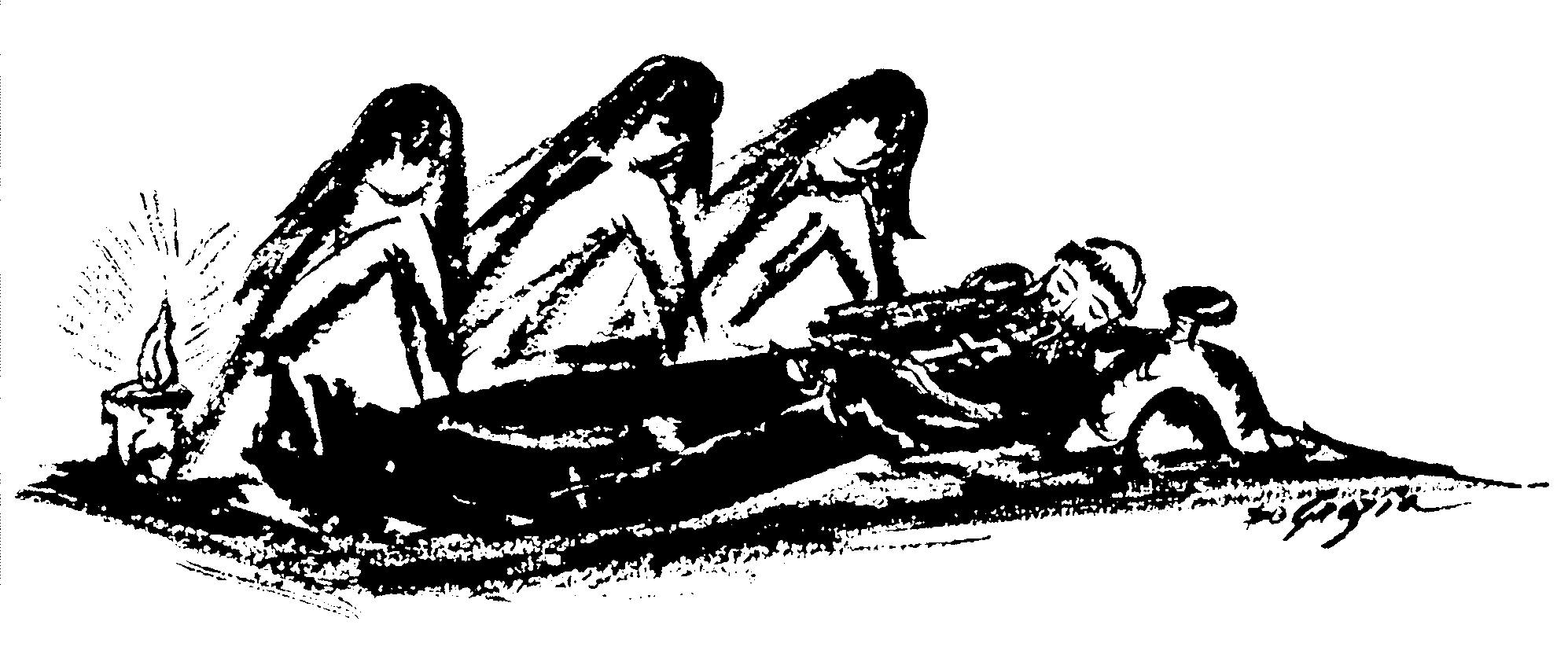
Death of Padre Kino
Midnight March 15, 1711
Magdalena - Kino's Trails End
Ettore "Ted" DeGrazia - Artist
End of the Trail and Death of Padre Kino
Herbert E. Bolton
One day near the middle of March, 1711, Kino rode over the familiar trail to Magdalena to dedicate a chapel in honor of his patron saint. It was the very season of the year when first he had threaded that mountain gap just twenty-four years previously. Spring flowers were in bloom and Nature was at her best. Magdalena, too, was in festive garb for the great occasion. But suddenly holiday colors were exchanged for the black of mourning. In the very midst of the dedication ceremony, in which he took a leading part, Kino became desperately ill and soon afterward died. It was fitting that his fellow-player in the final scene of the drama should be Father Campos, for eighteen years his co-laborer. Father Eusebio's last moments are described by Father Luis Velarde, his companion for eight years and his successor at Dolores.
"Father Kino died in the year 1711, having spent twenty-four years in glorious labors in this Pimería, which he entirely covered in forty expeditions made as best they could be made by two or three zealous workers. When he died he was almost seventy years old." As a matter of fact he was only sixty-six. "He died as he had lived, with extreme
|584| humility and poverty. In token of this, during his last illness he did not undress. His death bed, as his bed always, consisted of two calf skins for a mattress, two blankets such as the Indians use for covers, and a pack saddle for a pillow. Nor did the entreaties of Father Agustin move him to anything else. He died in the house of the Father where he had gone to dedicate a finely made chapel in his pueblo of Santa Magdalena, consecrated to San Francisco Xavier ....When he was singing the Mass of the dedication he felt indisposed,and it seems that the Holy Apostle, to whom he was ever devoted,was calling him, in order that, being buried in his chapel, he might accompany him, as we believe, in glory." [1]
It fell to Father Campos to consign Father Kino to the grave. The original record of the event, written in Father Agustin's own hand and signed with his well-known rubric, lies before me at this moment.It contains an epitome of the great Black Robe's repute in the land where he had run his remarkable career.
"THE YEAR 1711
"Padre Eusebio Franco. Kino.-On the fifteenth of March, a little after midnight, Father Eusebio Francisco Kino died with great peace and edification in this house and pueblo of Santa Magdalena at the age of seventy years, having been for nearly twenty-four years missionary of Nuestra Senora de los Dolores, which he himself founded. He worked tirelessly in continuous peregrinations and in the reduction of all this Pimería. He discovered the Casa Grande, the rivers Jila and Colorado, the Cocomaricopa and Suma nations, and the Quicimaspa of the Island. And now, resting in the Lord, he is buried in a coffin in this chapel of San Francisco Xavier on the Gospel side where fall the second and third choir seats. He was German by nationality and of the province to which Bavaria belongs, before he entered the Pimería having been missionary and cosmographer in California, in the time of Admiral Don Ysidro de Otondo.
AGUSTIN DE CAMPOS [rubric]." [2] |585|
The irony of fate I Kino spent a decade in man-killing explorations and endless demonstrations that California was a peninsula. The biographer has produced unimpeachable evidence of Kino's baptism in the Italian village of Segno. He has explained with scholastic pride, tempered by due modesty, his discovery of the way in which the A was dropped out of Admiral Atondo's name. And now, at the end, in the very obituary of his hero, written by the hero's companion of eighteen years, California is referred to as "the Island"; and the biographer has to read that Kino was "German by nationality" and that he was in California with Otondo. It was not fair for Campos to treat either Kino or the biographer so. He should have been better informed.
He had listened to Father Eusebio's critics. He had never made long weary journeys to and across the Colorado; he had never seen the sunrise over the Gulf; and he had never read this book.
A year after Kino's death Campos went to Tubutama and moved to Magdalena the remains of Manuel Gonzalez. Father Eusebio and his first friend in Pima Land now rested side by side. With Kino’s passing his fame at Magdalena grew. The statue of his patron saint installed in the chapel whose dedication was his last earthly act, became a shrine which until recently drew crowds of worshippers each year from Sonora, Arizona, and places even more remote. A few months ago the statue was removed and its veneration suppressed. But Kino's renown waxes greater. The folklore built around his name would fill another book. ..|586|
Herbert E. Bolton
Chapter 151
"The Last Ride""Rim of Christendom:
A Biography of Eusebio Francisco Kino: Pacific Coast Pioneer
Editor Note: Kino believed that he recovered at age 18 from a near fatal disease by the heavenly intercession of the great Jesuit missionary St. Francis Xavier, his patron saint while Kino was attending school near today's Innsbruck, Austria.
Bolton's statement "A few months ago the statue was removed and its veneration suppressed" refers to the then recent action of the government of the State of Sonora order all the Catholic churches be converted into labor halls and community centers including the church at Magdalena. All statutes and other religious object were removed. This period of anti-clericalism added another difficulty in the search for Kino's remains because of the oral tradition that his remains were hidden in different locations in Sonora.
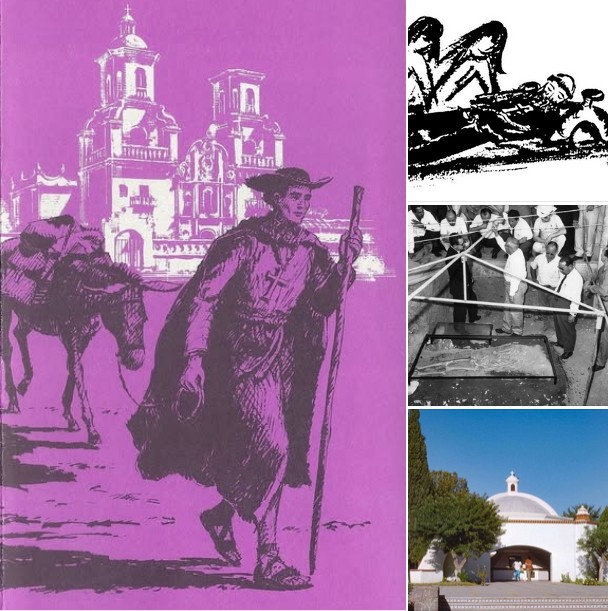
Kino at Mission San Xavier del Bac (Left)
Kino's Death - Artist Ettore "Ted" DeGrazia (Top Right)
Discovery of Kino's Skeletal Remains - Photographer Samuel Arreola (Middle Right)
Kino Masoleum, Magdalena de Kino, Sonora (Bottom Right)
Kino's Good Death On Laetare Sunday - Sunday of Hope and Joy
Mark O'Hare
Kino's Good Death - March 15, 1711 on Laetare Sunday - In Celebration of Finding Father Kino. This Year of 2026, the moveable feast of Laetare Sunday and the civil calendar date of March 15th coincide on the calendar. This synchronicity is well-timed because this year marks this May’s celebration of the 60th anniversary of the finding Padre Kino’s grave and skeletal remains in Magdalena.
In the Spring of 1711, Kino rode his last trail from his mission headquarters of Dolores to Magdalena. It was a Sunday of great joy in Magdalena for Padre Kino as he was celebrating Mass to dedicate the new chapel to his patron saint and his life's model the great missionary St. Francis Xavier. On Laetare Sunday the normal Lenten fasts and repentances are relaxed by the Catholic Church. In Magdalena a grand fiesta would follow to celebrate the Xavier chapel, however, Kino collapsed during Mass and died later before midnight. It was a good day for a good death for Kino - a man of great vision & hope who fully lived up to his exemplar Francis Xavier.
Kino was buried in the Xavier chapel but the chapel and Kino’s grave was lost. In May 1966, an international team of scholars and cronistas including archeologists, physical anthropologists and historians from Mexico's Instituto Nacional de Antropología e Historia (INAH) (National Institute of Anthropology and History), the Arizona State Museum in Tucson, Arizona, and the University of Arizona found Padre Kino’s grave and his skeletal remains.
The location where Kino's grave was discovered, is now protected in a mausoleum where his skeletal remains are displayed in the La Plaza Monumental Padre Eusebio Francisco Kino in Magdalena de Kino. The Kino Plaza is designated by the federal government of Mexico as a national monument. Kino is named by the federal government as a "Hero of Mexico."
Based on the Western Christian liturgical calendar Kino died on the moveable feast of Laetare Sunday and on the civil calendar date of March 15, 1711. Most years Laetare Sunday and March 15th do not fall on the same date. Laetare means rejoicing in Latin and the Mass celebrant wears rose colored vestments and not the purple colored vestments worn at other times in the Lenten season.
During the rest of this year 2026, there will be great celebrations marking the 60th anniversary of the finding Padre Kino’s grave and skeleton remains.
Read online Jorge Olvera’s account and other accounts about the extraordinary history of the discovery of Padre Kino's grave with its skeletal remains:
For The Account by Jorge Olvera H. (Web Page 3), click
https://www.padrekino.com/index.php/khs_home/kino-heritage/kino-grave-discovery-olvera-account
Excerpts from Jorge’s book in "Finding Father Kino: The Discovery of the Remains of Father Eusebio Francisco Kino, S.J. 1965 -1966" (English). In Spanish - Econtré los restos ye el espíritu de Kino: Mi diario de campo 1965-1966
For The Grave Site History (Web Page 1), click
https://www.padrekino.com/index.php/khs_home/kino-heritage/kino-grave-discovery
For Finding The Chapel (Web Page 2), click
https://www.padrekino.com/index.php/khs_home/kino-heritage/kino-grave-discovery-chapel
#PadreKino #venerablekino
Editor Note: "Kino’s Good Death" by Mark O'Hare was posted on the Facebook page of Eusebio Kino on March 14, 2026 at https://www.facebook.com/eusebio.kino.56/posts/pfbid02ocaXrapaTMnk178AmiTnDeaeAYxmGSWpr8jzLu5V28Hyvkf5nxyKDRwpHFemJUAkl
Annual Celebrations and Events
Magdalena de Kino and San Ignacio
Throughout the Magdalena de Kino Muncipal District
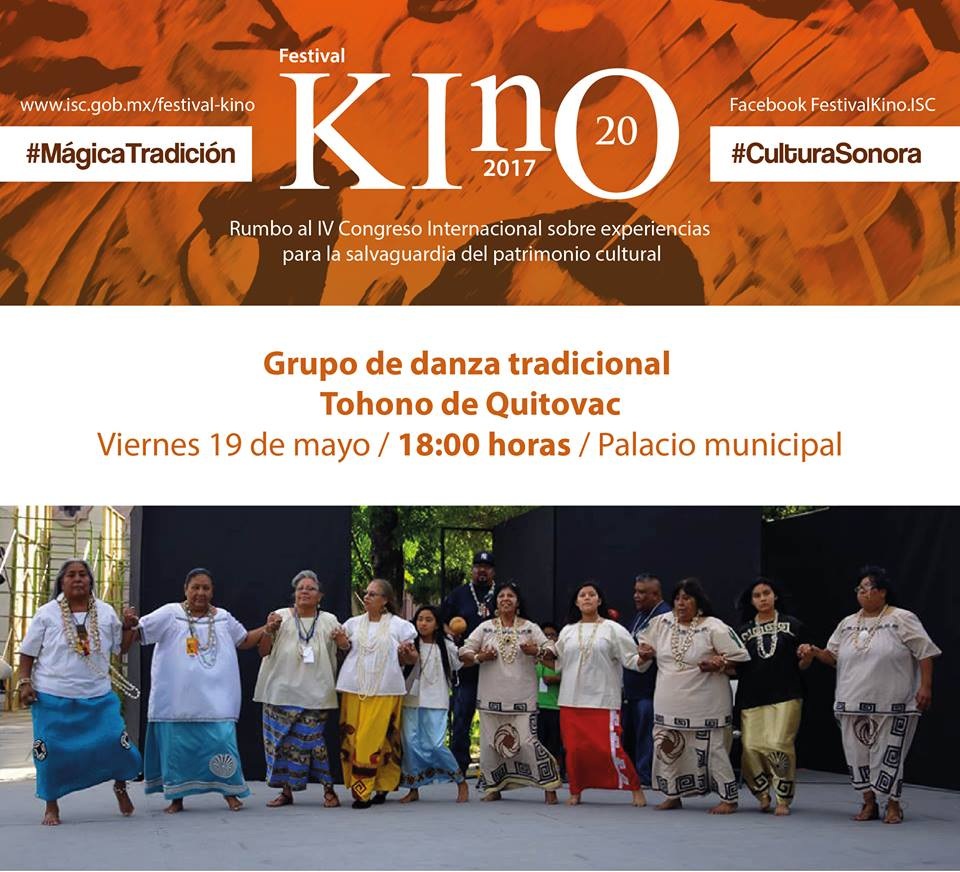
Tohono de Quitovac Traditional Dancers
Kino Festival 2017 - Event Program
Annual Celebrations and Events
Festival Cultural Kino
Kino Festival in mid May
Week long celebration of cultural events and performances around the date of discovery of Kino’s grave on May 19th
Magdalena de Kino
(See above for more information)
Feria de Santa María Magdalena
Festival of St. Mary Magdalene celebrating her saint's day of July 22nd
Patron Saint of Magdalena de Kino, Sonora
Magdalena de Kino
Fiesta de San Ignacio de Loyola
Festival of St. Ignatius of Loyola around his saint's day of July 31st
Patron Saint of San Ignacio
Magdalena de Kino and San Ignacio
Pilgrimage to Magdalena begins in early Autumn with people walking, bicycling and horseback riding to Magdalena in acts of faith and later enjoying the the Fiesta de San Francisco.
Fiesta de San Francisco - week long celebrations until October 3rd.
Religious Observance of The Three Franciscos: Xavier, Assisi and Kino
October 4th - saint's day Assisi
Magdalena de Kino
Feria del Membrillo in October
Membrillo and Quince Festival in October
San Ignacio
Feria del Tamal in February
Tamale Fiesta
Magdalena de Kino
Silent March at Twilight on March 15th
Honoring Eusebio Francisco Kino on the anniversary day of his death.
Magdalena de Kino
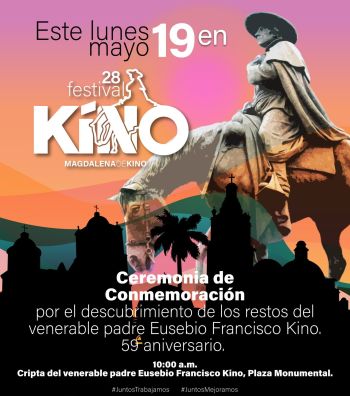
Kino Festival Poster Celebrating Discovery of Padre Kino's Grave - 2025
28th Annual Festival
Kino Festival in May
The Magdalena Kino Festival is the 2nd largest cultural event in Sonora that features great diversity of exceptional performances and events: music including symphonic orchestra with opera divas, pop and rock groups; dance performances including O'odham and Yaqui traditional dances, folklorico and ballet; regional theater productions, local talent shows and a circus; together with talks, workshops and art exhibits; and the annual opening day parade and the Sunday cabalgata from San Ignacio to Magdalena with the traditional horseback riders and the recent addition of bicycle riders - all joining in honor of our heroic Padre Kino and the discovery of his grave in May 1966.
Other communities in Sonora that join with Magdalena in honoring Padre Kino in May with their own wide range of academic, cultural, and educational activities performances and events. Some of the communties are San Ignacio, San Lorenzo, Ímuris, Santa Ana, Sáric, Átil, Oquitoa, Curcupe and Caborca.
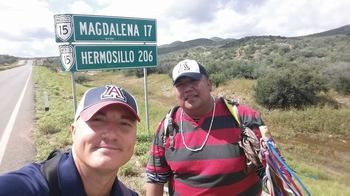
Journalist Paul Cicala and Bronson Smith Walking Another Magdalena Pilgrimage
55 Miles (88 Kilometers) From Ambos Nogales To Magdalena de Kino
Reflexiones De La Peregrinación A Magdalena De Kino 2025
[Reflections On the Pilgrimage To Magdalena de Kino 2025]
Gabriel Ruiz
Pilgrim, Producer and Videographer
In Spanish with English Subtitles (6 minutes)
Pilgrimage from Kino’s Mission de Nuestra Señora del Pilar y Santiago de Cocóspera
To view, click
https://www.youtube.com/watch?v=LvwCxky09cQ
Magdalena Pilgrimage Video
Paul Cicala
Annual 100-kilometer walk by Tucsonans & O'odham to Magdalena, Sonora
News 4 Reports - KVOA TV September 26, 2018 (11 minutes) in English
To view, click
https://www.youtube.com/watch?v=aVgM6mf5xds
La Fiesta de San Francisco Javier - Magdalena de Kino
The Magdalena Pilgrimage and Fiesta
Sergio Raczko
Documentary In Spanish
To view, click
https://www.youtube.com/watch?v=jWtt0Gvek1Y
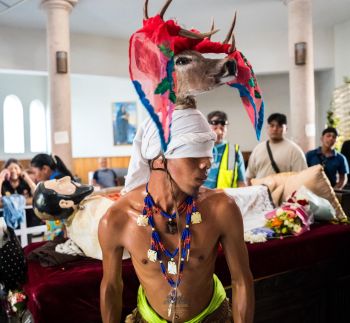
Yoeme Yaqui Deer Dancer at San Xavier Chapel
Gerardo L. Gerardo - Photographer
Pilgrimage To Magdalena and
Festival de San Francisco In Early Autumn
James S. ("Big Jim") Griffith
The religious fiesta held every October 4 in Magdalena de Kino is by far the most important pilgrimage event in the Sonoran Desert. It attracts thousands of people to the old mission town. Many walk sixty or a hundred miles as an act of devotion to the saint.
In order to understand it, we must know a little history. Father Kino, who did so much to open this region to European evangelism and settlement died in 1711 and was buried in Magdalena, some sixty miles south of the present international border. His patron saint, and the patron of missionaries in general, was Saint Francis Xavier, a remarkable sixteenth-century Jesuit who did intensive missionary work in both Japan and India, died off the coast of China in 1552, and found his last resting place in the then Portuguese colony of Goa on the east coast of India. His body was preserved in lime for his final journey. That it arrived and remained in excellent condition was a sign to some of St. Francis's followers of his intensely spiritual nature. For this reason, one of the standard representations of this saint is as a corpse reclining and dressed in a cassock or vestments. Such a statue is the focus of pilgrimages to Magdalena.
However, San Francisco has undergone some remarkable transformations in northern Sonora. In the first place, many of those who attend the annual fiesta held in his name now feel San Francisco and Father Kino to be one and the same. Both, after all, were famous missionaries; both are dead. Why shouldn't the statue of the dead man in the church be a representation of the dead man whose bones have been on public view in the middle of the plaza since 1966, where Father Kino's grave was discovered and opened? As a result of this discovery, which followed an intensive investigation sponsored by the Mexican government, Magdalena was officially renamed Magdalena de Kino. In addition, a small dome was built over Father Kino's excavated grave, which is on permanent view in the plaza renovated in his honor.
Nor is that the only way in which Magdalena's cult of San Francisco is unusual. While the feast of Saint Francis Xavier in the Catholic calendar is December 3, the fiesta in Magdalena is celebrated on October 4, the feast day of Saint Francis of Assisi. This further confusion is probably a result of the historical fact that in 1767 the Jesuit order, of which Father Kino was a member, was expelled from all the Spanish dominions and was replaced in northern Sonora by the Franciscans. The members of this totally different organization had as their patron saint another Francis - Saint Francis of Assisi. The ensuing confusion in the dates of the Magdalena fiesta is easy to understand.
These details matter little to the thousands of pilgrims who flock to Magdalena each year, visiting their saint and then engaging in the sort of social and economic activity that calls to pilgrims - and secular tourists as well - the world around. They buy souvenirs, eat, drink, and listen to strolling musicians, and generally cap their religious journey with a thoroughly secular good time. The Fiesta de San Francisco in Magdalena is one of those occasions when the traditional cultures of the region are at their most visible, when the region's history is at its most accessible.
James S. Griffith
"Legends and Religious Arts of Magdalena de Kino"
"Southern Arizona Folk Arts"
Editor Note: Dr. James S. ("Big Jim") Griffith said that the statue of the reclining Francis Xavier is rarely seen beyond Sonora. He was only aware of the statue of reclining Xavier being displayed in Goa, India, where Xavier is buried and in a church in Bavaria.
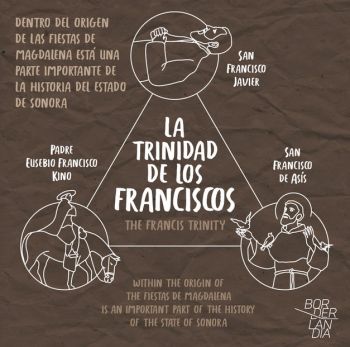
Three Franciscos of The Magdalena Pilgrimage - Xavier, Assisi and Kino
Borderlandia Infographic - Alex La Pierre
The San Francisco Xavier Pilgrimage to Magdalena de Kino
Alex La Pierre
“San Francisco es un santo muy milagroso, pero a la vez es un santo muy cobrador, y lo que debes, pagas." ("Saint Francis is a very miraculous saint, but at the same time he is a saint who exacts his price, and what you owe, you pay.") — James S. Griffith
It is said to be a tradition dating back at least 300 years when no border wall or political division existed bisecting the Arizona-Sonora borderlands region. Every year thousands of people representing different cultures walk on pilgrimage to the northern Sonoran community of Magdalena de Kino, Mexico, approximately 60 miles south of the US-Mexico boundary. The pilgrimage terminus of Magdalena is where pilgrims annually arrive on foot or on horseback to visit the popular borderlands saint of San Francisco Xavier in the days and weeks leading up to the traditional feast day of October 4. Typically, after visiting the reclining statue of the saint, the pilgrims also frequently take advantage of being on the plaza in the Sonoran community to peer down into the neighboring crypt of a Jesuit pathfinder named Father Eusebio Francisco Kino. This action of also visiting with Kino is very appropriate given the missionary’s role as the seventeenth-century harbinger of the cult of San Francisco Xavier into the Arizona-Sonora borderlands, an area known in Spanish colonial records as the Pimeria Alta.
This document presents an exploration of this binational cultural phenomenon by first providing brief biographies of Father Kino and patron San Francisco Xavier, followed by a background behind the tradition of the pilgrimage of San Francisco Xavier to Magdalena, Sonora, and finally examining the cultural stakeholders of the tradition and reasons for partaking.
To understand the origins of this tradition, an awareness of an early important Arizona- Sonora borderlands personality and patron saint is key. Eusebio Kino was born in 1645 in the alpine Trent region of Italy but at the time of birth his surname was Chini (the last name was later Hispanicized to Kino) and this birthplace was then part of the Austro-Hungarian Empire. Eusebio Kino took the middle name of Francisco as a young man in recognition of Saint Francis Xavier whose intervention he accredited to healing himself during an extreme illness along with the promise of following in his footsteps to become a missionary.
Kino likely looked up to Saint Francis Xavier, one of the founding members of the Jesuit order in the 16th century as the ultimate incarnation of a missionary having reached India and as far away as Japan to evangelize for the Roman Catholic church and performed miracles along the way. Inspired by this example, excelling in Jesuit schools and rising in the ranks of university academia, Kino kept on his promise to become a Jesuit missionary initially desiring to proselytize in China - a goal also originally on the horizon of patron San Francisco Xavier but cut short by the saint’s death on an island just off that mainland. However, when the time arrived to be shipped out to fulfill the work of an apostle, there was only one place for the mission to China but two candidates, Kino and another Jesuit. By a stroke of fate, it was decided that Kino would be sent to Mexico instead of a missionizing post in China. Kino’s adeptness at astronomy and cartography earned the freshly arrived Jesuit a place on a Spanish colonial expansion expedition to Baja California.
Due to a lack of rain for the fruition of crops, the California mission was called off and Padre Kino was re-assigned to what was considered the ‘rim of Christendom,’ the limits of New Spain in present-day northern Sonora and southern Arizona. Kino spent 24 years founding missions in this entire region and forever changing its cultural landscape in the process.
One of the Jesuit’s greatest achievements was discovering that California was one of the longest peninsulas in the world rather than an island as was commonly depicted in maps of the era. Father Kino passed away in Magdalena in 1711 after just completing the construction of a chapel dedicated to his patron of San Francisco Xavier and came to be buried within the small church. Eusebio’s other great achievement was as the region’s first peacemaker between the indigenous and Spanish, potentially the reason that in death, the Jesuit priest came to be honored by members of the Tohono O'odham arriving to pay their respect to the black robe from as far away as San Xavier del Bac mission - a potential origin of this pilgrimage tradition.
The life Eusebio Francisco Kino led and the history he left us as a major figure in Arizona-Sonora history is the cause for inspiration by many and currently the Jesuit missionary of the Pimeria Alta is being considered for sainthood by the Vatican.
An indigenous community called Uquivaba (meaning “high cliff” or “spring”) of a tribe then known as the Pima - and now the Tohono O’odham nation existed along the banks of a life-giving river in the Sonoran Desert. This village is where Kino arrived in 1690 to found Santa Maria Magdalena de Uquivaba as a visita - essentially a sub-mission without a resident priest under the jurisdiction of a nearby mission equipped with a priest called cabecera - in this case nearby San Ignacio de Caborica. The priest stationed in San Ignacio would administer duties such as baptisms, marriages, burials, and masses on occasion at Magdalena along with the other nearby visita station of Imuris.
There is a prominent local legend relating the reason why the statue of San Francisco Xavier, the icon of the pilgrimage, is located in Magdalena rather than the statue’s intended destination of its more northerly namesake, San Xavier del Bac. It is because an incident while in transit to the northern mission curtailed San Francisco Xavier’s journey: when the men carrying the statue of the saint rested in Magdalena and upon resumption of the journey the statue could not be lifted or moved and so since then it has been considered a divine intervention for placement in its present home.
Dating to the Jesuit period in Magdalena, one can still see the cobblestone foundations in a perfect line of the chapel dedicated to San Francisco Xavier within which the black-robed pathfinder was buried when looking down into the crypt in the Kino Memorial plaza. This stone footing is perhaps an indicator of the evolution in the tradition from journeying to pay respect to the deceased Padre Kino buried within the chapel dedicated to San Francisco Xavier to honoring rather the patron saint the black robe brought to the region. Considering the patron of the chapel where Kino was laid to rest was the destination of the earliest of pilgrims to Magdalena and that Padre Kino is still not officially a saint in the Catholic tradition, this could be a logical conclusion.
Another peculiar aspect of the pilgrimage to Magdalena in honor of San Francisco Xavier is that the feast day celebrated in Magdalena (October 4) is not the Jesuit saint’s feast day (December 3) but rather of another saint named Francis - San Francisco de Assisi. This alteration of the date to celebrate the Jesuit saint on the feast day of the founder of the Franciscan order is perhaps directly due to the circumstances of the Jesuit expulsion from Spanish territories in 1768 by the Spanish Bourbon monarchy. Franciscan missionaries may have altered the date in recognition of their order’s founder, who were assigned to the Pimeria Alta to fill the void where their Jesuit predecessors left off due to their sudden expulsion.
Many of the monumental-scale missions that continue to exist today in the region are physical marks of the Franciscan's ambitious building program, influence, and presence. In this way, one can see the layers of history of the region wrapped up in the pilgrimage and fiestas in Magdalena culminating on October 4 and in homage and honor of the trinity of Francis’ - Kino, Xavier, and Assisi.
In a description published in KIVA of the Fiestas de Magdalena in 1967, University of Arizona anthropologist James Griffith organizes the groups and activities of the participant stakeholders in this annual tradition. Big Jim acknowledges three cultural groups present in Magdalena de Kino drawn by the Fiestas: Mexicans and Mexican-Americans, Tohono O’odham from the U.S., and Yaqui and Mayos from southern Sonora. These cultural identities are further broken down by Griffith into roles at the fiestas, that of the pilgrim, the merchant, and the entertainer. Based on the Arizona folklorists' observations, the conclusion he draws on the festival’s 20th-century evolution is that the religious role of the pilgrim and the commercial role of the merchant is frequently merging with the modernization of northern Mexico. However, it appears that the commercial interests are for many indigenous pilgrims frequently practical and secondary to help finance the costs associated with the primary: making the pilgrimage. The Yaqui from southern Sonoran towns like Potam tend to fulfill the role of entertainers - musicians and dancers of traditional Yaqui dances such as the deer dance and pascolas. Neighbors of the Yaquis, the Mayos also perform their cultural dances with music including the harp in and around the plaza of Magdalena.
When asking these varying stakeholders their motivation behind walking the distance to Magdalena, pilgrims will most frequently cite a personal manda. The manda is a promise you make to San Francisco Xavier to come on foot or even on horseback to show your sacrifice for a petition the pilgrim makes to the Saint to intercede on behalf of their request. In return for the sacrifice, the pilgrim-aspirant hopes to benefit from the miraculous spiritual power attributed to San Francisco Xavier in the fulfillment of a particular prayer request.
The current reality that the San Francisco Xavier pilgrimage now spans the breadth of two countries highlights not only a pilgrimage that crosses borders literally but also a crossing of boundaries figuratively. It requires one to pause and reflect beyond modern political institutions like the border with its myriad of agencies and accompanying red tape to think of a time in the origins of this tradition when this all did not exist. Perhaps even more importantly, participation or merely observation in this pilgrimage is a cause for recognition in the unison of common humanity in the struggle for life beyond nationalities given the tradition’s diverse participation. As such, it can serve as a healing example from the region’s history of goodwill beyond cultural borders in aspiration of one day shedding the present era’s militarized environment rooted in the fear of the other, essentially as a counternarrative.
The pilgrimage to Magdalena can also be considered a ritual emulation of the past, rooted in religious belief but also key to the modern identity and traditions of present-day Sonorans and Arizonans of diverse cultural backgrounds. Tellingly, a statue of Eusebio Francisco Kino, one of two statues from the state of Arizona, stands in the National Hall of Statuary in the Capitol building of Washington D.C. in acknowledgment of the Jesuit’s place etched into the history of our nation. With this central position in the national psyche, there may be hope for wider reflection on the example Kino and patron San Francisco Xavier led of crossing borders to peacefully and spiritually interact with different cultures, now manifested by this pilgrimage to Magdalena, and as a legacy for guiding future international relations in the borderlands.
Editor Note: Alex La Pierre is an noted "cronista" - a recognized community expert on the culture and history of Arizona and Mexico. As of 2024, Alex has twice walked the Magdalena Pilgrimage from Nogales, Sonora. For almost a decade Alex has given internationally acclaimed tours of Arizona and Mexico through his company Borderlandia including guiding several tours a year tof Magdalena de Kino that leave from Nogales, Arizona. To read Alex's original article of the Magdalena Pilgrimage with great pictures and videos, click
https://www.borderlandia.org/magazine18/pilgrimage-magdalena
Alex guides excellent tours of Magdalena de Kino several times a year that includes transportation from the United States. See below for information on the tours in the section titled Alex La Pierre - Borderlandia, Magdalena de Kino Day Tours.
For more information about the Magdalena Pilgrimage, click
https://www.padrekino.com/index.php/khs_home/kino-heritage/kino-magdalena-pilgrimage
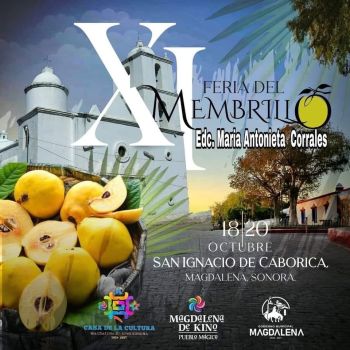
Feria del Membrillo in San Ignacio de Caborica - Poster 2024
San Ignacio, Municipality of Magdalena de Kino
Feria del Membrillo in October
San Ignacio celebrates its Feria del Membrillo for three days with a full schedule of events, music and other entertainment. Membrillo is the sweet reddish firm paste made from the fruit of the quince tree that is enjoyed through out the world.
The quince tree was cultivated long before the apple tree. In ancient Greece, the quince fruit was dedicated to Aphrodite as a symbol of love and fertility. The Romans cooked it with honey and used it in rituals. In fact, some experts believe the famous "golden apple" of legends was a quince.
Carried by the Spanish to the Americas, the quince tree was first cultivated in today’s northwest Mexico by Padre Kino. Although the quince fruit is not consumed raw because of its tart taste, its products like membrillo are rich in fiber, tannins, pectin, vitamin C and antioxidants. With a perfect climate, the orchards around San Ignacio produces some of the best quince fruit in the world that is used in its faous membrillo.
Membrillo is a specialty food of the delicious Sonoran cuisine sold in stores throughout the borderlands and served in Magdalena's restaurants. The many delightful restaurants of Magdalena also use other field-to-table ingredients that come fresh from neighboring farms. The beef entrees are the best tasting in all of Mexico from the cattle raised on nearby ranches.
The name of Magdalena's semi-pro baseball team honors Magdalena's fame for the best membrillo. The name of the team is the Los Membrilleros de Magdalena (The Membrillo Makers of Magdalena.) Two former Membrilleros are playing baseball in the major leagues: Luis Urías of the Milwaukee Brewers and his brother Ramón Urías of the Baltimore Orioles.
Scroll down the page to places of interest for more information about Mission San Ignacio.
Places of Interest
Magdalena de Kino Municipal District
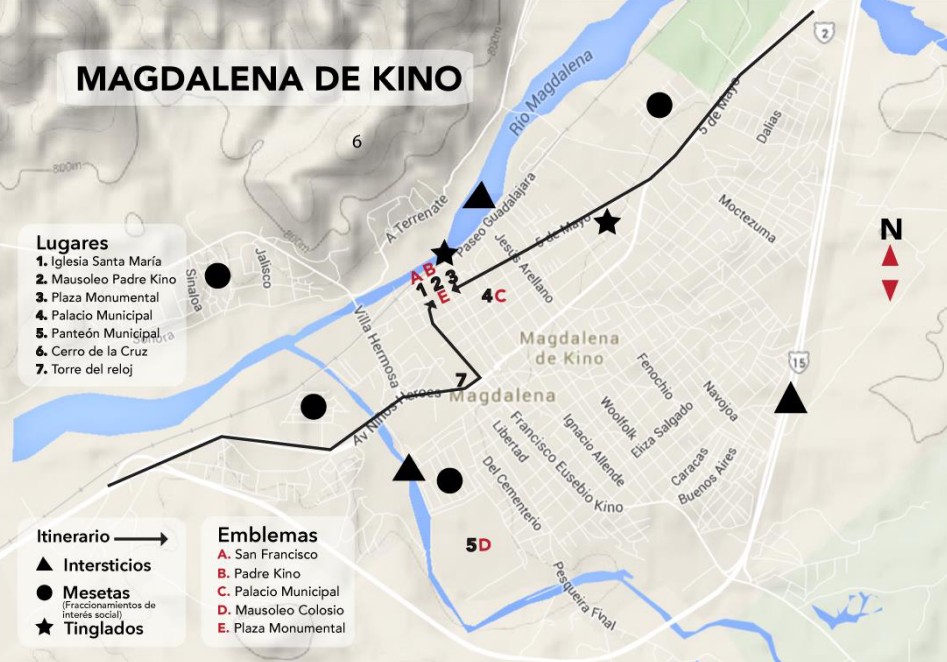
Map of Places of Interest
Places of Interest
Plaza Monumental Padre Eusebio Francisco Kino
Monument Plaza
Magdalena de Kino
Lugares #3
Mausoleo del Padre Kino
Kino Mausoleum
Monument Plaza
Magdalena de Kino
Lugares #2
Templo de Santa María Magdalena
Santa María Magdalena Church
Monument Plaza
Magdalena de Kino
Lugures #1
Capilla de San Francisco Javier
St Francis Xavier Chapel
Monument Plaza
Magdalena de Kino
Right side of Santa María Magdalena Church
Chapel location not shown on map above.
Museo Comunitario
Magdalena Community Museum
Monument Plaza
Magdalena de Kino
Palacio Municipal
Governmental Building of the Magdalena de Kino Municipal District
Magdalena de Kino
Lugares #4
La Misión de San Ignacio de Cabórica
St. Ignatius Loyola Mission
San Ignacio
10 miles north of Magdalena de Kino on Highway 15
Colegio Juan Fenochio
1917 capital of the State of Sonora where its constitution was promulgated.
Magdalena de Kino
Mausoleo de Luis Donaldo Colosio Murrieta y Diana Laura Riojas
Mausoleum of Luis Donaldo Colosio Murrieta y Diana Laura Riojas
Magdalena de Kino
Lugares #5
Valle de los Sahuaros
Beautiful Sahuaro Forest
Five minute south the Plaza Monumental
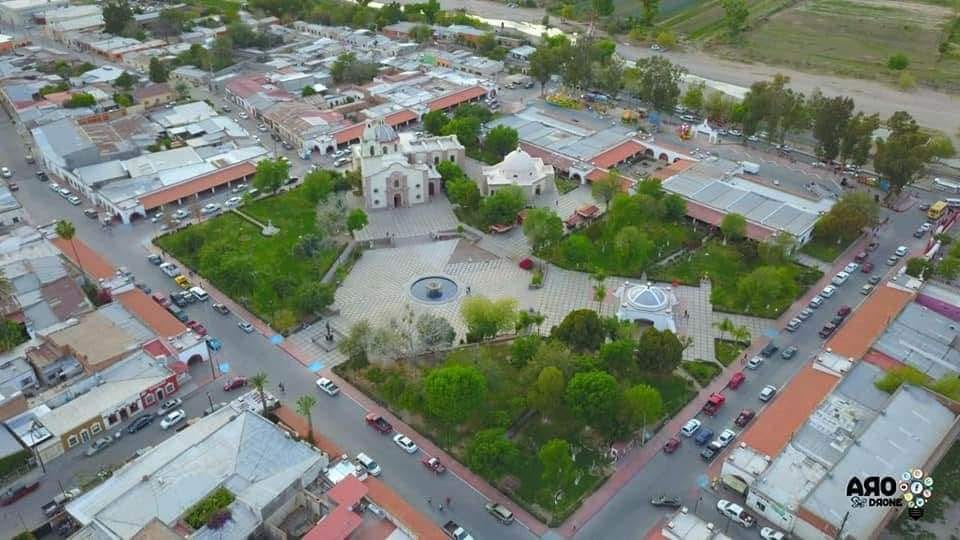
Plaza Monumental Padre Eusebio Francisco Kino
National Monument of Mexico
Church of Santa Maria Magdalena and New Chapel of San Francisco Xavier (center)
Kino Mausolem (lower right)
Plaza Monumental Padre Eusebio Francisco Kino
Charles W. Polzer
The discovery of Padre Kino's grave in 1966 only set the stage for change in Magdalena. .... Kino's remains could not be left unprotected from the weather or unguarded from the curious and devout. Jimenez Moreno also urged some suitable memorial be designed. ... Covered by a metal roofed shed, a sealed glass vault encased the remains that were left in situ.
So it was that Magdalena waited while federal, state and local officials pondered the proper solution. The care of the grave site passed on to the Instituto Nacional de Antropología e Historia [INAH] ... a group of prominent Magdalena citizens, who also served on the Comité del Monumento del Padre Kino, appealed to the Mexican federal government for a change in plans in the development of the Kino |181| monument. Acquiescing to their desires, the government referred the project to the new Governor of Sonora, Faustino Felix Serna. He initiated a completely new plan — more comprehensive, more ambitious and more in accord with the local situation. Subsequently, the architect, Francisco Artigas, who distinguished himself in the colonial restoration of Guanajuato, was invited to design the Plaza of Padre Kino in Magdalena.
Artigas' problem consisted in the integration of several architectural features. The grave was not to be touched; the church was to be remodeled; and a site for a museum and library were to be included. His solution focused each element on a sunken octagonal fountain, thus achieving integration with simplicity and balance. The entire fifteen acre plaza was enclosed by portales (arched, beamed walkways) reminiscent of 18th century building design.
While the details of construction were being worked out, the Comité in Magdalena began the difficult task of relocating the many |182| families who lived in the affected area. Homes the inhabitants considered ancestral were to be leveled for the plaza. With an admirable sense of civic pride, and not without sacrifice, these families moved into newer houses provided in other parts of town. Over 7,000 square yards of buildings were removed to prepare for new construction.
Who paid the bill? Everyone seems to ask. The citizens of Magdalena, individually and through civic groups, contributed over one million pesos toward the ten million peso project. The rest of the financing came through matched donations from the federal and state governments. Cooperation was the key to the Plaza's creation.
In January of 1970 the Constructora Federal de Escuelas Públicas (CAFPCE) began work under the direction of the engineer Francisco Fernandez. The restoration of the church was given over to the engineer Juan Jose Lecanda. Using local materials and labor, architect Gustavo Aguilar from Hermosillo pressed completion of the entire complex by December of the same year.
Before the Plaza was begun, the future president of Mexico, Lic. |183| Luis Echeverría Alvarez, visited Magdalena in December, 1969. Expressing his admiration for the gigantic labors of Padre Kino in advancing civilization in northwestern Mexico, he solemnly promised to return to inaugurate the memorial plaza. He kept his promise on May 2, 1971; a finished plaza and a proud population awaited him. At noon that day the newly elected President of Mexico visited the crypt while peals of applause welled from the "Pimalteños" who knew their President shared the enthusiasm of their heritage. ... |184|
Charles W. Polzer
The Padre Kino Memorial Plaza
"Kino, A Legacy: His Life, His Works, His Mission, His Monuments” 1998
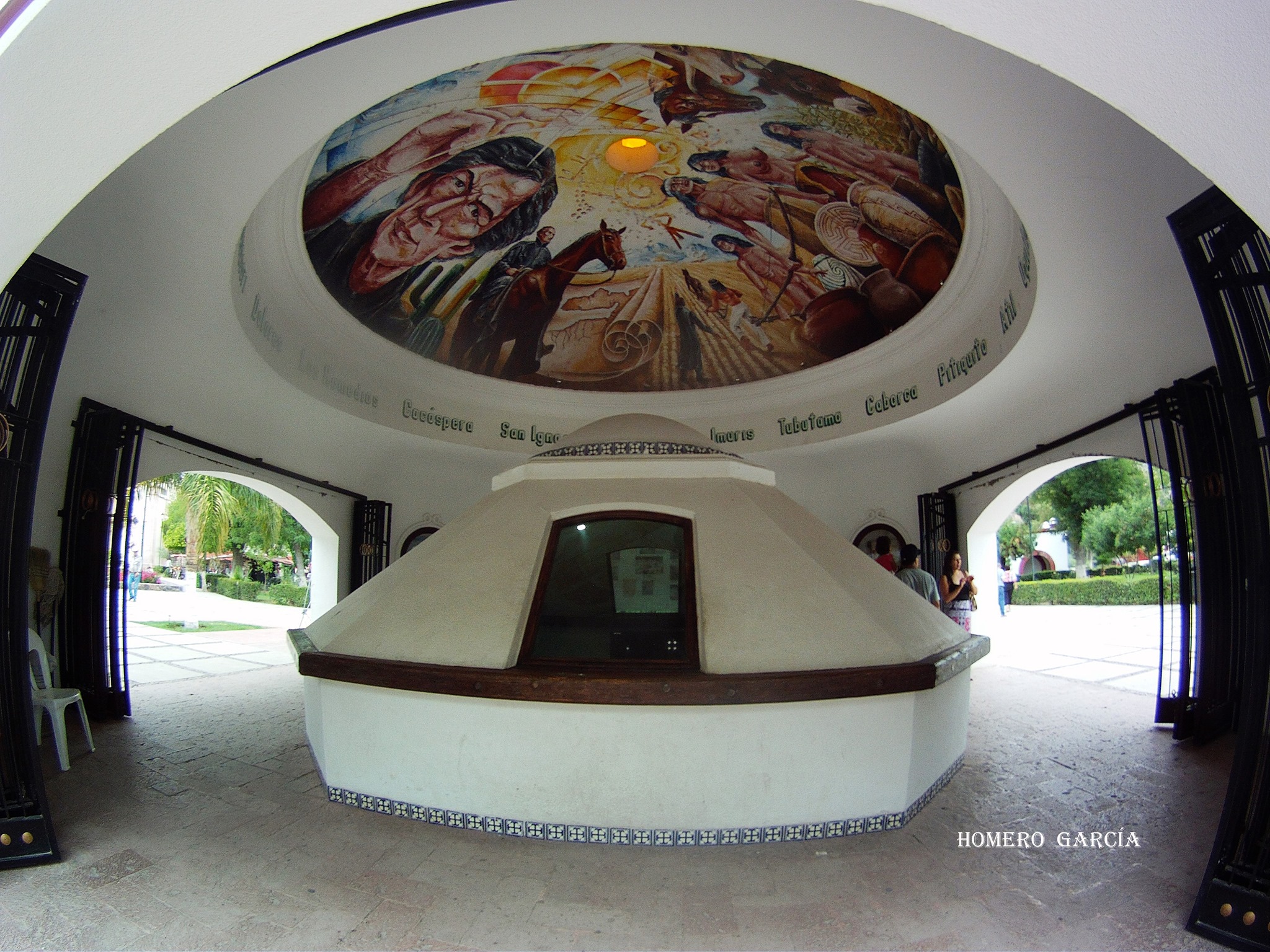
Mausoleo del Padre Kino
Kino Mausoleum
Homer Garcia - Photographer
Kino Mausoleum
Charles W. Polzer
The domed crypt [masoleum] cloaks a sudden surprise for the casual visitor who may utter a quiet word while looking down at the exposed remains. The architects shaped the crypt and dome to make a perfect contained megaphone so that even whispers can be heard all around the crypt — eliminating the need for guides to use microphones! And often when a visitor approaches the crypt from the sunken plaza, he will see Kino's determined face reflected in one of the windows.
This was the clever de sign of Nereo de la Peria, a Mexican muralist from Caborca who painted the Rivera-esque scenes of Kino's life around the in side of the dome. His artistic talents have even migrated back to Segno, the town of Kino's birth, where with murals.
Magdalena de Kino now guards the mortal remains of the Padre on Horseback. More splendor than Kino ever knew on the desert trails of the Pimería Alta surrounds him in the plaza that bears his name. He was a man who enjoyed good art and good architecture. He was proud of the churches the Indians had built at Dolores, Remedios and Cocóspera. And he thrilled at the sight of hundreds of his friends coming across the deserts to share in celebrations. Normally drowsy and quiet, the plaza in Magdalena for countless decades has filled with pilgrims to the place where he was buried. ... Yet, the people kept coming to Magdalena, ostensibly to visit "San Francisco." One can only wonder how Padre Kino feels now, centuries later, when thousands continue to visit this latest monument erected in his honor. |185|
Charles W. Polzer
The Padre Kino Memorial Plaza
“Kino, A Legacy: His Life, His Works, His Mission, His Monuments” 1998
Beautiful Reflections on The Discovery of Padre Kino's Grave - Excerpts
Midge Pino
To View Midge Pino's Entire Facebook Blog, click
dSnrtesopo4i723f11t0tu9am6hug5228lt0ahf4440f0lf512ft77h437f5
"Cala el frio, llueve ligeramente en el pueblo de Magdalena de Kino. Las calles lucen casi vacías, se resguardan de las equipatas de febrero que traen incluidas ráfagas de aire que el ingeniero Trujillo muy acertadamente pronosticó.
La majestuosa plaza monumental parece un lienzo interactivo. Los paisajes cambian de colores en el cielo, los cerros juegan a las escondidas con la lluvia que los oculta. Para el lado del río se ve el humo del puesto de comida de “Don Tilo”, el menudo, el champurro siempre listo aunque llueva o truene.
Me siento tranquila a observar el lugar mientras llegan a trabajar al mausoleo del padre Kino.
Me pregunto cómo un lugar tan apacible puede guardar y gritar en sus muros tanta historia.
El templo que está frente a mí es Santa María Magdalena, el mismo que fue destruido en dos ocasiones por rebeliones indígenas.
Incluso lo convirtieron en la casa del pueblo en la época de la persecución religiosa donde dicen que hasta bailes y graves profanaciones se realizaron en el sagrado recinto que aún se mantiene en pie.
La plaza por las tardes te invita a que te sientes en sus bancas y observes los monumentos que en ella fueron erigidos para honrar a personas ilustres. Sin imaginar que debajo de las banquetas y jardines en algún momento fue un cementerio o el antiguo palacio municipal.
Durante mucho tiempo se desconoció la morada de los restos del padre Kino. Historiadores, arqueólogos, antropólogos, sacerdotes de Sonora y Arizona tuvieron la inquietud de encontrar los restos:
Esto se debe a que el lugar donde fue sepultado fue destruido. Muchos hasta dudaron que el padre Kino haya muerto en Magdalena, pero en el acta de defunción que el padre Agustín de Campos redactó da muchos detalles del lugar exacto del sepulcro.
El padre Agustín de Campos construyó una capilla especialmente para la recién llegada imagen de San Francisco Javier, hermosa y venerada por todo el Noroeste. Esta capilla fue inaugurada por el padre Kino el 15 de marzo de 1711. Ese mismo día, poco antes de medianoche murió el padre Kino. ...
El no quedar rastro de la antigua capilla dificultó por muchos años la localización de los restos óseos del misionero jesuita. Incluso encontrar el acta de defunción del padre Kino fue una aventura ya que fue hurtada.
“Un día del año de 1879 llegó a Magdalena un señor de apellido Pinart, de ascendencia francesa. Era aficionado a la historia y también a otras cosas. Dicen, no me consta, que pidió permiso al párroco para ver los archivos, aprovechó las sombras de la noche para poner una escalera y entrar por la ventana al archivo parroquial. Se llevó buena parte de los documentos, los cuales pronto emprendieron viaje hacia los Estados Unidos. Allí iba también el acta de defunción del padre Kino.
“Pinart vendió dichos documentos no sabemos a quién, pero los tuvo en su poder el famoso historiador norteamericano Bancroft, y ahora se encuentran en la Biblioteca Bancroft de Berkeley, California. Por fortuna nuestros buenos vecinos enviaron una fotocopia a la parroquia de Magdalena y así se pudo conocer la célebre acta de defunción” (Pbro, Cruz G. Acuña, En busca del padre Kino).
La pregunta seguía siendo la misma, ¿dónde está la capilla?
Nadie podía decirlo. ....
Cronista Municipal de Magdalena
Migde Pino"
Mi Magdalena de Kino Sonora
Facebook Blog
February 27, 2023
For the Entire Text of Midge's Facebook Blog, click
dSnrtesopo4i723f11t0tu9am6hug5228lt0ahf4440f0lf512ft77h437f5
Editor Note: In 2024 Midge Pino received second place for her paper delivered at the XLVI Congreso Nacional de Cronistas de Comunidades y Ciudades de México.
In addition to being the cronista of Madgalena de Kino, Midge is a professional photographer. See some of her masterful work at https://www.facebook.com/MigdeFotografia. Her photography is stunning.
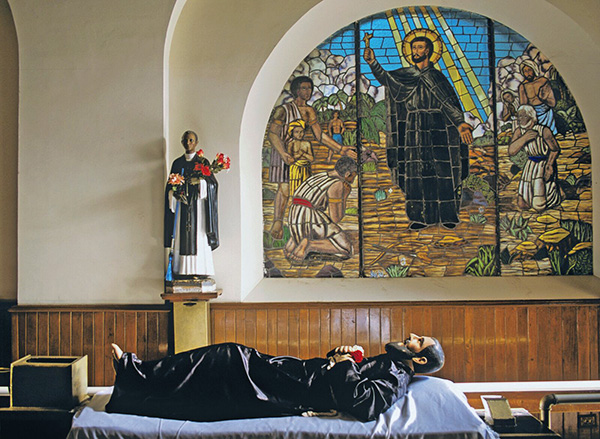
Capilla de San Francisco Javier
Chapel of San Francisco Xavier
To view the Magdalena Pilgrimage Page, click
https://www.padrekino.com/index.php/khs_home/kino-heritage/kino-magdalena-pilgrimage
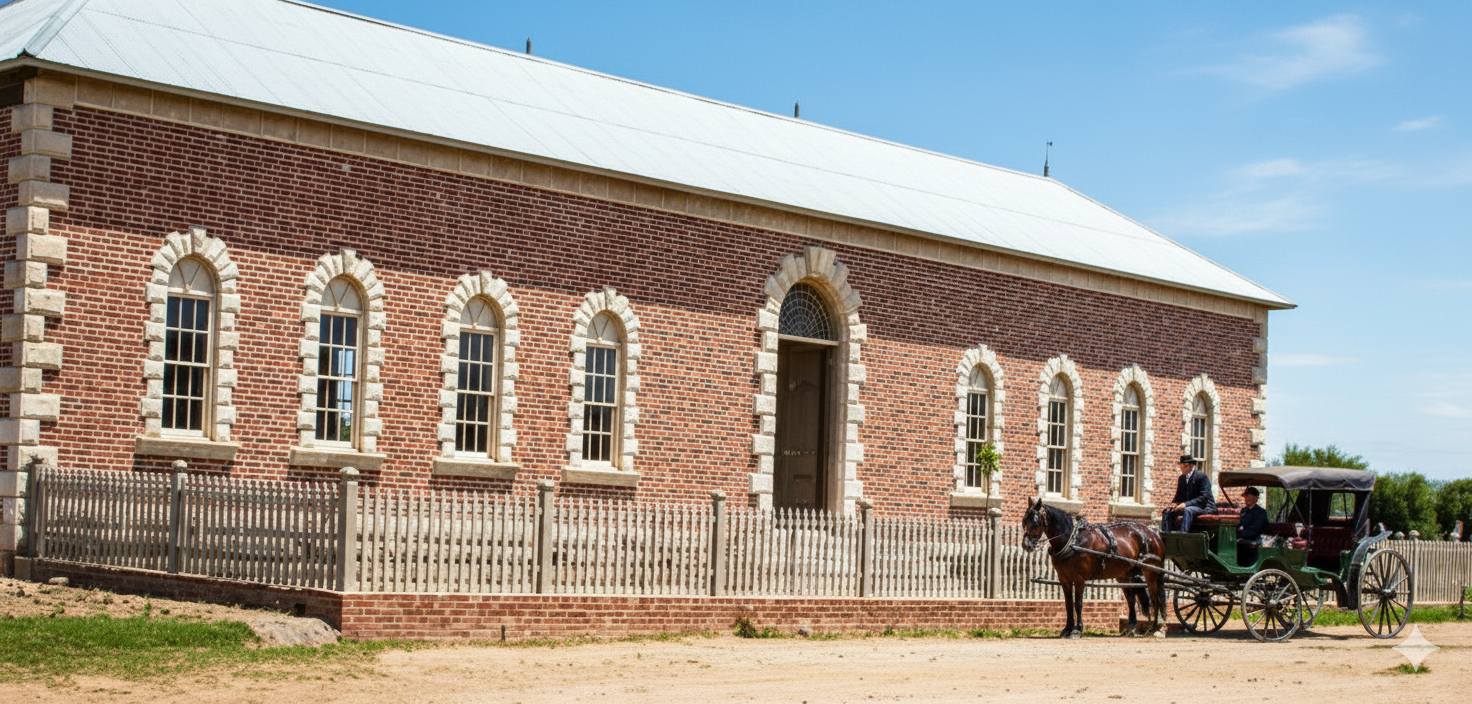
Colegio Juan Fenochio
Color Added To The Original Photograph
Colegio Juan Fenochio
Site of 1917 Constitutional Convention for The State of Sonora
In 1906, the construction was completed for the Colegio Juan Fenochio, a beautiful building for Magdalena's primary school for boys and girls. The school was named in honor of Colonel Juan Fenochio for his leadership in raising of funds for the school, and his vision and lifetime of service for a better Magdalena.
In 1917 Magdalena was designated the “provisional” capital of the State of Sonora. The Colegio Juan Fenochio became the seat of the Congress of the State of Sonora where its new constitution was drafted over a three month period of time. In Magdalena, on September 15, 2017, the 1917 Constitution of the State of Sonora was enacted and promulgated. Today the Colegio Juan Fenochio is a public primary school. Its famous students include Luis Donaldo Colosio, the leading 1994 presidential candidate before his assassination.Today the school building and its history remains a symbol of freedom and progress for all Sonorans.
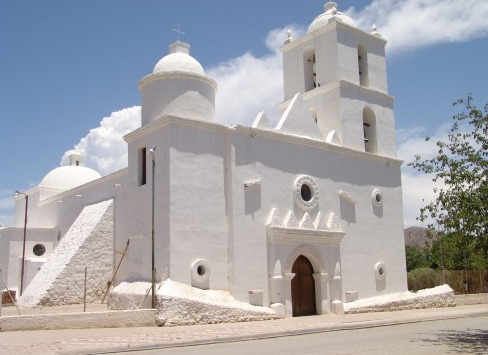
La Misión de San Ignacio de Cabórica
Mission San Ignacio de Cabórica
San Ignacio
Five Miles North of Magdalena de Kino
Mission San Ignacio de Cabórica
The day after Father Kino first arrived in 1687 at his mission headquarters of Dolores, Kino rode more than 20 miles over the mountains to the O’odham village of Cabórica. Kino entered the village "whose inhabitants, with their chief met us carrying bows and arrows, and to our great pleasure welcomed us kindly." He named the village “San Ignacio” in honor of St. Ignatius Loyola, one of the founders of Kino’s Jesuit order.
It appears that the church at San Ignacio was completed by 1702 when Father Campos recorded that he buried one of his fellow Jesuits near the altar of the church. In 1630, the church building was described as being "deteriorated.”
After the Jesuit Expulsion in 1676, Bishop Antonio de los Reyes reported: “The Mission of San Ignacio, with two outlying mission stations, is located on an extensive lowland surrounded by high mountains. An arroyo flows by these villages and it offers easy irrigation for the plentiful and fertile lands of the same. ... The house of the Father Missionary is beside the church but in the recent year of 1770 some of the living rooms and offices beside the house of the Missionary were destroyed. There is a garden with plentiful pomegranate, quince, peaches, and for want of cultivation a good grapevine was lost. ...
Franciscan Father Sánchez Zúñiga arrived at San Ignacio in 1772. He made major alterations on the old structure by adding to the existing sun-dried abode interior walls a veneer of fired bricks as the exterior walls and adding a buttress to shore up a wall. Today visitors can see this beautiful church with its barrel vaulted roof and domes. A special design element is a mesquite spiral staircase leading to one of the bell towers that visitors can climb.
San Ignacio's three day Feria del Membrillo is celebrated in October (see above.)
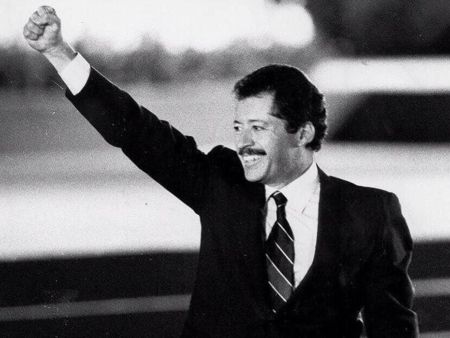
Luis Donaldo Colosio Murrieta (1950-1994)
Magdalena's Illustrious Son & PRI's 1994 Presidential Candidate of Hope and Change
Mausoleo de Luis Donaldo Colosio Murrieta y Diana Laura Riojas
Mausoleum of Luis Donaldo Colosio Murrieta y Diana Laura Riojas
Mausoleum of Luis Donaldo Colosio Murrieta y Diana Laura Riojas
Luis Donaldo Colosio Murrieta, born to a respected Magdalena family, was the 1994 presidential candidate of the Institutional Revolutionary Party (PRI). He was a candidate of hope and change with a new vision for Mexico.
Before running for president, Luis Colosio served as a federal deputy and senator representing Sonora from districts that included his native Magdalena. Later he held national positions as Secretario de Desarrollo (Secretary of Social Development) and as president of PRI.
Luis Colosio was assassinated at a campaign rally in Tijuana March 1994, two weeks after he delivered a controversial but very popular speech in front of the Monument to the Mexican Revolution in Mexico City. He wanted a Mexico for all people when he said “I see a Mexico that is hungry and thirsty for justice. A Mexico of aggrieved individuals, of individuals aggrieved by the distortions of the law by those who should serve it. Of women and men afflicted by the abuse of the authorities and the arrogance of government offices.”
He and his wife Diana are interred in the inspiring Mausoleo de Luis Donaldo Colosio Murrieta y Diana Laura Riojas. Diana worked as an economist in the public and private sectors including the Mexico's Secretariat of Planning and the Budget. Seven months after her husband’s death, Diana died while forwarding her husband's vision and investigating his murder, leaving two young children behind. Diana died from pancreatic cancer.
Mission Santa Maria Magdalena During Kino's Life
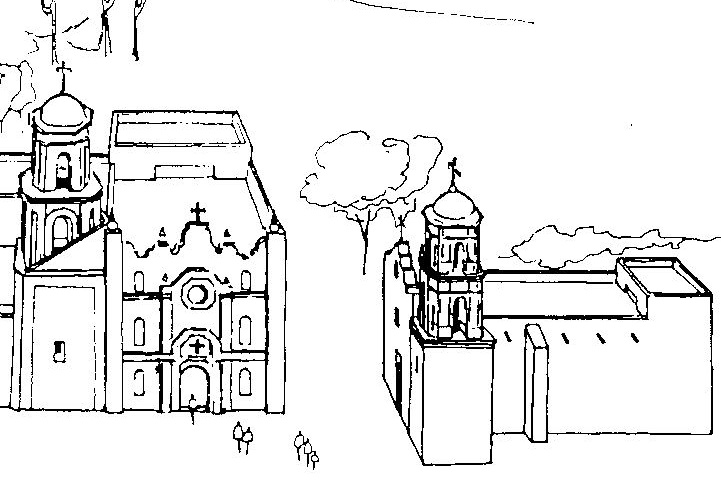
Campos Church (1706) and San Xavier Chapel (1711)
San Xavier Chapel Length: 54 feet (16.5 meters) Width: 23 feet (7.2 meters)
Foundation Width: 3.4 feet (1.05 meters)
Estimated Bell Tower Height: 28 feet (9.5 meters)
Campos Church Approximate Length: 70 feet (21 meters) Width: 20 feet (6 meters)
Measured Nave Interior Width 18.3 feet (5.6 meters)
Jorge Olvera - Concept Drawing, Conrad Gallegos, Draftsman
Founder of Pueblo Santa María de Magdalena
Jorge Olvera
|172| How did Father Kino choose the site for the establishment of Mission of Santa María Magdalena? He found this mission in 1687 when he first entered the Pimería Alta, accompanied by his superior, Father Visitor Manuel González. Even that he was in the company |173| of the Father Visitor was in compliance with Ordinance Number 7: “.. . these [discoverers] shall go in pairs so they can render mutual aid to one another."
In the choice of sites for settlement, Ordinance Number 40 recommended: "Very high places shall not be chosen, as they are disturbed by the winds and are difficult of access. Choose intermediate sites, provided with free breezes, especially from the north and south. And if it should be next to a mountain range, it should be seen that this will be on its east side or to the west. If for any particular reason a high place should be built, it should be seen that there is no fog. And if a site should be founded and built on a riverside, see that it is laid out on the east side."
Kino seems to have followed these instructions very closely when he founded Magdalena. He chose the east side of the river and situated Magdalena with the sierras flanking it on the east and west. ... is work as a planner is just beginning to be understood, and thanks in large measure to our research begun during our efforts to locate his venerable remains.
When Kino laid out the settlement of the Mission of Santa María Magdalena, the embryo of the future city, he may not actually have traced the central plaza (what in Roman times would have been the forum). Nevertheless, he had it in mind when he sited the first two and most important buildings of that time: the primitive mission church, begun 1705 (later called the Campos church, because Father Campos was its principal builder), and the chapel of San Francisco Xavier, which he also planned but which Father Campos finished and Kino dedicated in 1711.
These two pillars of the Mission of Santa Maria Magdalena, the first two constructions, were laid out along axis, the cardo [north-south] and decumanus [east-west], that generated the beginning of a settlement destined eventually become a city aligned in terms of Roman planning principles. Looking carefully at the map of Magdalena, one can see that the Chapel of Saint Francis Xavier was built perpendicular to the nave of the Campos church and is oriented exactly north-south, where as the Campos |174| church is orientated exactly east-west. It is known that in addition to his other talents, Father Kino was a trained cartographer (see Burrus 1965). It is more than likely that the man known to have brought an astrolabe with him to the Pimeria Alta used a compass for these operations.
In the positioning of these two buildings lies the generating axis for the growth of the present city of Magdalena and its expansion north‑south along the river and east‑west on either side of it (with most extension to the east where it is not blocked by a steep hill). If the Campos church and the San Xavier chapel had been left in situ and their outlines fully preserved, one would immediately see that the facade of the Campos church and the nave of the chapel faced the later plaza. Also, our later excavations and the unearthing of the foundations of the Campos church and those of the chapel (see Fig. 37, contour map) revealed that the seeds of the first streets and avenues were already contained in the pod of Kino's plan.
One of the first streets to be traced lies in the space created between the facade of the chapel, which faced due south, and the north side of the nave of the Campos church. Immediately parallel to this small and narrow street which ran east west towards the river, there is now Calle Cucurpe, which runs precisely east west from the river towards a second and smaller plaza a block and a quarter from the ancient buildings and a block from the present main plaza. The next main avenue (only a block away from the main plaza) is Calle Obregon. Thanks to Kino, the entire present city of Magdalena is laid out in a chessboard pattern springing from the two axial streets of Roman urban planning: the cardo and the decumanus.
This initial settlement plan made by Kino and constructed by Father Agustin de Campos was not only the starting point for the future city, but it followed certain fortification principles recommended by the Royal Ordinances. One of those ordinances, Number 133, stated: "Arrange the buildings in such a way that the lodgings can enjoy the breezes of the south and the north, and at the same time function as fortresses. Each house will have its own corrals or stock yards.” In the Kino plan for the settlement, the corrals were located behind the Campos church and the chapel, on the slope, was defended somewhat by the sharp drop in terrain towards the river. |175|
Now that we have located the exact place where the Campos church and the Campos priest's house stood, it is further possible to demonstrate how the facades of the Campos church and house, with the lateral facade of the chapel, formed a great defensive wall that in military terms is called a "curtain" (see Fig. 37, contour map). From the contour map one can discern that both the Campos church and the Chapel of San Francisco Xavier were built on the highest part of the site. Behind then was a slope and sharp drop in the terrain to the river. All these elements helped protect the mission. ... If we add the lateral facade of the Saint Francis Xavier chapel, which aligns with these other facades, to these large surfaces and elevations, we have almost a continuous and sturdy barrier or rampart protecting the mission from the east side. It is protected from the west by a sharp drop in the natural terrain and by the river.
Jorge Olvera
Finding Father Kino:
The Discovery of the Remains of Father Eusebio Francisco Kino, S.J. 1965-1966
Santa María de Magdalena and Capilla de San Xavier
Jorge Olvera
|139| Magdalena, Sonora, September 25, 1965
One of the most important building blocks in our eventually successful search for Father Kino's remains turned out to be Kino's own explanation of helping Father Augustín Campos build the mission church of Santa María Magdalena around March 1706.
We studying all the points dealing with the architecture of Kino's missions because we wanted to be able to recognize the buried remains of the Campos church or of the chapel of Saint Francis Xavier should we come upon them during excavations. There was, we knew, no one better than Father Kino himself to describe his building methods. In 1706 he was very busy building several churches for Father Campos, as he tells in his diary:
"At this same time, in this nearer Pimería, we had in hand the building of the churches of Father Agustin de Campos's pueblo of Santa Maria Magdalena and of San Ambrosio del Busanic, Santa Gertrudis de Saric, San Pedro y San Pablo del Tubutama, San Diego del Pitiquin, Nuestra Señora de la Concepción del Cavorca (and others), and in this mission ... it was attempt to advance the building of all. To this end I took with me the guasinques, or carpenters, now somewhat expert of this pueblo of Nuestra Señora de los Dolores; and so, after my return on March 2, and around the middle of March, I was in Santa María Magdalena supervising the cutting and assembling the timbers for the construction of the arches of the sanctuary of the very good church which Father Agustín de Campos was building.” [Note 4] (Kino 1913-1922)
|140| ..... As all the Kino and Campos churches were being built of adobe, Kino was overseeing correct cutting of the timbers and assembly of the parts that go into the centering for the construction of the adobe arches.
[Note 4] Crucial here is Kino's statement, “I was ... supervising the cutting and assembling of the timbers for the construction of the arches of the sanctuary ... '" This suggests he was overseeing the operation of assembling the centering for construction of the arches over the sanctuary. Over these arches, if he were referring to the transept, he could have had in mind a dome or vault above the sanctuary proper.
Jorge Olvera
Finding Father Kino:
The Discovery of the Remains of Father Eusebio Francisco Kino 1965-1966
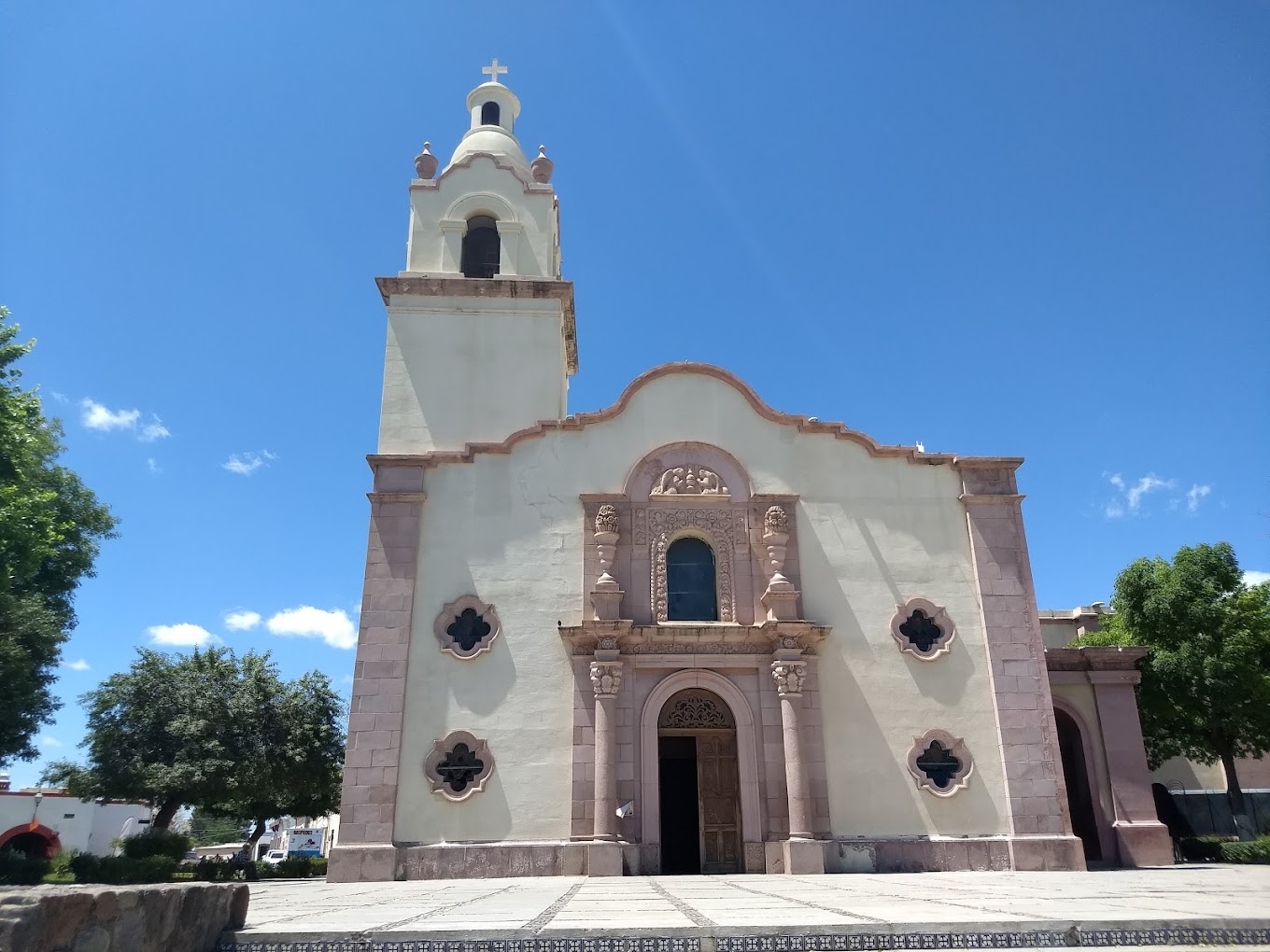
Templo de Santa María Magdalena
Santa María Magdalena Church
The Last Major Missionary Church Built in the Pimería Alta - Dedicated in 1832
Present Magdalena Church's Footprint Similar to Kino's Remedios Church
Length 90 Feet, Width 30 Feet
Present Madgalena Church's Footprint Similar To Kino's Remedios Church
Jorge Olvera
I was able to confirm that the length of the nave [of Remedios), from facade to the apse, measured 30 meters, exactly the same length as that of the present church of Magdalena. And when I measured the width of the facade, I saw something I could hardly believe: the total with of the facade was 10 meters, exactly the same as that of the facade of the Magdalena parish church. This, of course, discounts the widths of the flanking bell tower and sacristy of Santa Maria Magdalena.
Jorge Olvera
Finding Father Kino:
The Discovery of the Remains of Father Eusebio Francisco Kino, S.J. 1965-1966
More Kino - The Builder and Architect and His Magdalena Town Plan and San Xavier Chapel at https://www.padrekino.com/index.php/khs_home/kino-life/kino-architect-builder
Mi Pasión por la Historia: Breve Microhistoria de Magdalena de Kino
Aldaberto Demara Soto - Autor
Magdalena de Kino Chronology - A Very Abbreviated Timeline
1687 March Kino begins his early Jesuit missions in the O'odham villages that he names San Ignacio de Cabúrica and Magdalena de Buquivaba.
1693 Augustin Campos, S.J. assigned as mission priest to San Ignacio.
1702 First church in existence at San Ignacio de Cabúrica; remodeled after 1772.
1705 First church is completed in Magdalena de Buquivaba.
1711 First San Xavier Chapel building is completed in Magdalena de Buquivaba.
1711 Kino dies and is buried in Magdalena after collapsing at dedication of San Xavier Chapel. March 15, 1711.
1712 First yearly Magdalena Pilgrimage begins commemorating Kino.
1767 Jesuits expelled from Sonora and other Spanish lands worldwide.
1776 Magdalena attacked by Comcaac (Seris) - town is almost completely destroyed.
1810 Mexican War of Independence from Spain begins.
1832 Present Santa María Magdalena church is dedicated.
1879 Pinart steals Magdalena church records and sells to Bancroft Library, California.
1882 Family of Federico José María (“Fred") Ronstadt (1868-1954) makes Magdalena their home until Fred's father's retirement in 1887. In 1882, Fred at age 14 leaves Magdalena to apprentice in Tucson to learn the blacksmithing and wagon trade. Earlier his family lived in Magdalena when Fred was 4 years old. Fred's granddaughter is the famous singer Linda Ronstadt.
1882 Railroad comes to Magdalena on the line from Guaymus to Benson, Arizona.
1887 Major regional earthquake near Bavispe destroys buildings in Magdalena.
1905 Completion of Magdalena city hall - demolished for new plaza in the 1970s.
1910 Mexican Revolution begins.
1917 Constitution for Sonora enacted after 3 months of deliberation by the constitutional convention meeting in the Colegio Juan Fenochio. During this time Magdalena was designated the capital of the State of Sonora.
1934 Sonoran state government officials under its anti-clerical campaign ordered that the present Magdalena church be converted to secular uses and become a community meeting hall. The original reclining statue of Francis Xavier brought by Kino was removed and thereafter never found - presumed destroyed. At the San Ignacio church the doors were locked with official government seals and all church furniture and other accessories removed from the nave and altar and locked in the sacristry and baptistry rooms. 1934 September.
1943 One of Mexico’s military academies, the Academia Militarizada de Occidente opens in its new building that is now the current Palacio Municipal de Magdalena.
1965 Microfiche copies of Magdalena church records from Bancroft Library, California, donated to Magdalena by anthropologist Henry Dobbins.
1965 Anthropologists from National Institute of Anthropology and History (INAH) arrive in Sonora to begin search for Kino’s lost grave under directive from Mexico's president. 1965 August.
1966 Kino’s grave and skeletal remains found by a team of scientists and historians from the National Institute of Anthropology and History (INAH) of Mexico, the Arizona State Museum and the University of Arizona together with the invaluable help of community cronistas from throughout Sonora and Arizona. 1966 May 19.
1966 Mexican Academy of History confirms identity of Kino’s remains. 1966 July 14.
1968 Magdalena's official name is changed to Magdalena de Kino. 1968 June 26.
1972 Mexico President Echeverria dedicates newly constructed central plaza named Plaza Monumental Padre Eusebio Francisco Kino - a national monument of Mexico.
1974 President Ford of the United States visits Magdalena to meet President Echeverria of Mexico. 1974 October 21.
1994 Magdalena’s Luis Colosio assassinated - then the 1994 leading candidate for the Mexican presidency. 1994 March.
1997 First Kino Festival - now second largest cultural event in Sonora. 1997 May.
2012 Magdalena de Kino designated as a “Pueblo Magico” by federal government.
2015 Magdalena’s Claudia Pavlovich elected Sonora's first woman governor.
2020 Kino named as venerable by Pope Francis - important step towards sainthood.
2025 - 2026 - 60th Anniversary of the Discovery of Kino's Grave.
Newspaper Article Summaries Of Magdalena Stories
In Southern Arizona English-Language Newspapers (1870-1911)
To view, an online database of stories by Southern Arizona English-Language newspapers about Magdalena with article summaries from 1870-1911,
Click
https://arizonahistoricalsociety.org//wp-content/uploads/2021/02/library_Ayres-Index_Magdalena_2020.pdf
The Arizona Historical Society has an online database of Southern Arizona English-Language stories from that is categorized by subject with article summaries. It is called the "James Ayres Newspaper Index, Early Southern Arizona Newspaper Index, 1859-1911." Dr. Jim Ayres, in his retirement, categorized microfilm copies of the newspapers by subject at the Arizona Historical Society Library in Tucson, Arizona. Dr. Ayers during his career as a professor of physical anthropology at the Univeristy of Arizona assisted in the discovery and preservation of Padre Kino’s skeletal remains.
Information for Visitors
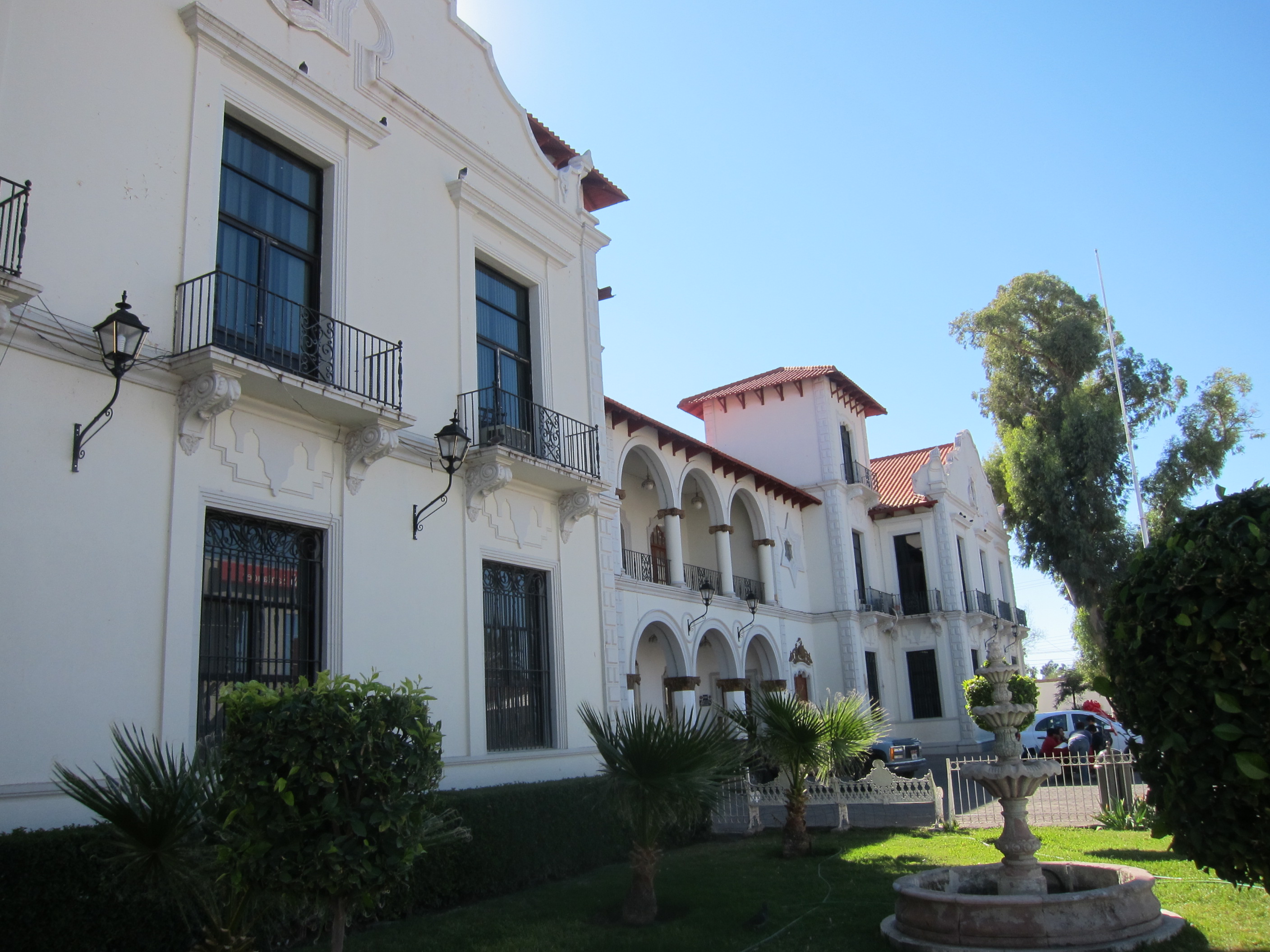
Palacio Municipal de Magdalena
Magdalena de Kino's Municipal Government Building
Magdalena de Kino
Libro - Guía De Turismo 2020
Raúl Alfonso Millán Molina - Author
To view the visitor's guide to Magdalena de Kino published by the Secretary of Tourism of the Government of Mexico, click
http://sistemas.sectur.gob.mx/dgots/---14-guias-turismo/magdalena-de-kino-sonora.pdf
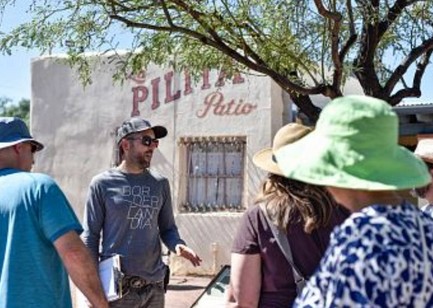
Alex La Pierre Giving One of His Nationally Recognized Tours
AARP Magazine Photo
Magdalena Day Tours - Several Per Year
By Alex La Pierre - Borderlandia
Tours Begin in Nogales, Arizona in the United States
Recognized by the New York Times and other national publications, Alex La Pierre gives several tours during the year to Magdalena de Kino. The Magdalena Day Tour starts in Nogales, Arizona, in the United States where visitors meet and park before crossing into Mexico on foot. Near the border crossing, the tour's profession driver begins the tour by driving the scenic 55 miles of divided highway to Magdalena de Kino. See the change of terrain from the oak-juniper zone of Nogales to the land of saguaros of Magdalena while following ancient desert river paths.
The tour fee includes guide services, transportation, breakfast at a roadside stop, lunch in Magdalena and admission to museums. On the way back to Nogales in the afternoon, there is also a tour of the beautiful Mission San Ignacio, home of October's Membrillo Festival.
As of August 2025 the tour fee is $95.
For upcoming tour dates and up-to-date information, click on Borderlandia's Magdalena Day Tour page at
https://www.borderlandia.org/shop/p/magdalena-daytrip
Also do not miss the Borderlandia Magdalena de Kino Day Trip video with beautiful footage of the town and sites of Magdalena and Mission San Ignacio. The 2 minute video can be viewed at
https://www.youtube.com/watch?v=i7ZvsPhNaZ8
A Remarkable Statute
Reclining Statute of San Francisco Xavier
“Milgrosa Imagen De Sn. Francisco Javier.
Que Se Venera En Al Iglelsia Parroquial De La Villa De La Magdalena. Sonora”
Currier and Ives Lithograph
Currier and Ives Lithograph of San Francisco Statue
James S. ("Big Jim") Griffith
The famous New York firm of Currier and Ives also made an image Magdalena’s San Francisco. I have not been above to discover anything about the circumstances of its production, but from internal evidence it seems to have been made between 1874 and 1890.[41] It is entitled “MILGROSA IMAGEN DE SN. FRANCISCO JAVIER. Que se venera en al Iglesia Parroquial de la villa de la Magdalena, SONORA” (Miraculous statue of St. Francis Xavier which is venerated in the parish church of the town of Magdalena, Sonora) [42]
It shows the saint reclining in an open-fronted casket that is flanked by kneeling angels bearing candelabra. The saint is bearded and his hands are folded; his feet are not crossed. he is wear a white garment covered by a rich cloak that is hung over his shoulders. Over the casket hover twelve cherub heads in a cloud. The statue certainly does not appear to be the same as that show in the old photographs or in the Posada print. These images of Magdalena’s San Francisco, like the legends recounted earlier, are evidence of the |56| regional importance of this unique composite saint. Like the legends, they tie the Arizona-Sonora borderlands to other parts of the world, while at that same time affirming the regional important of the devotion. .. |57|
James S. Griffith
Beliefs and Holy Places:
A Spiritual Geography of the Pimeria Alta 1992
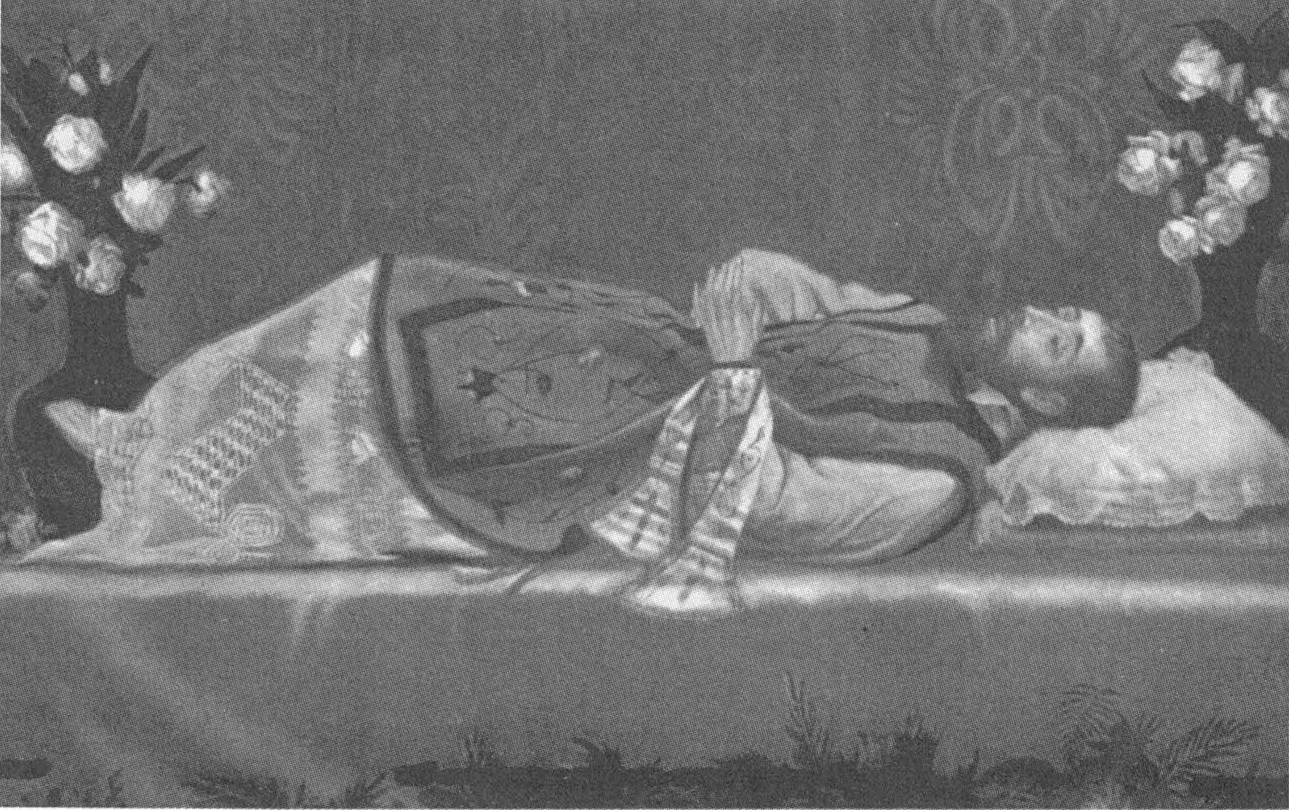
Photograph of Reclining Statute of St. Francis Xavier Before 1930
Model For José Guadalupe Posada Print
San Francisco Statue Photograph Before 1930
James S. ("Big Jim") Griffith
In Sonora, the leftist regime of Plutarco Elias CaIles actively discouraged and even attempted to suppress many Catholic practices.
In September of 1934, Sonoran government officials ordered that the saints' images, including that of San Francisco, be removed from the church in Magdalena and carried to the capital city of Hermosillo. There they were burned in the furnaces of “Cervecería Sonora” - the Sonora Brewery. The church building itself was converted to secular uses, becoming a meeting place, library, and dance hall. This state of affairs seems to have lasted for about a decade before the building was restored to its religious function.
Many stories circulate among Magdalena's Catholics concerning the terrible fates that overtook the men and women who were involved with this act of desecration. ... |50|
No matter what some of the faithful may believe, it appears to me that the statue of San Francisco from Magdalena really was burned in the furnaces of the Cervecería Sonora. The pictorial representations sold in the stores that cater to pilgrims in Magdalena all seem to be taken from a photograph of the statue as it was before the 1930s. The saint is shown as a bearded man, dressed in Mass vestments. (This was until recently the way Roman Catholic priests were buried.) His hands are folded in prayer with their fingers interlaced. His knees are slightly bent and his feet crossed. He is flanked by two ornate vases holding what appear to be chrysanthemums. Hanging behind him is a richly embroidered or brocaded cloth. Not only has the setting for the statue completely changed, the statue simply does not appear to be the one that is in the chapel now. |55|...
This, or a similar photograph, seems to have been used as a model for a metal engraving of the statue that was apparently executed in Mexico City. Although many of the details in the engraving are different from the photograph, the two are similar enough that the photo may have served as a rough model for an artist who was accustomed to supplying many of his own details. The plate was signed by Jose Guadalupe Posada, the great Mexican popular engraver who worked in Mexico City for the Arroyo Vanegas printing firm and died in 1913.4° It is labeled "SAN FRANCISCO JAVIER DE MAGDALENA SONORA." I have not found this print reproduced or mentioned in any catalogue of Posada's work. I have seen copies of it for sale as devotional pictures (as opposed to art objects) in the Magdalena plaza as recently as 1987. |56|
James S. Griffith
Beliefs and Holy Places:
A Spiritual Geography of the Pimeria Alta 1992
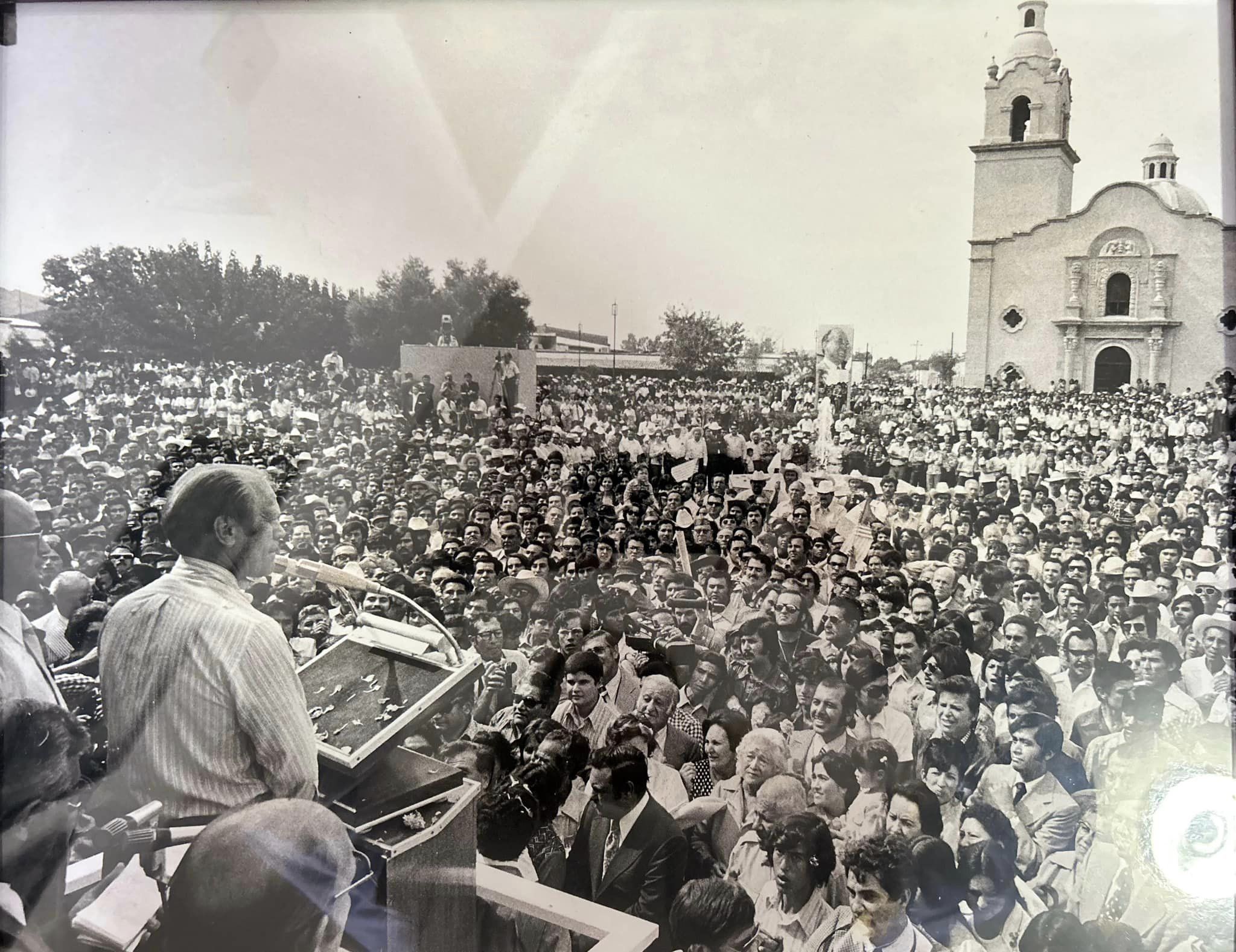
U.S. President Gerald Ford
Plaza Monumental Padre Eusebio Francisco
Magdalena de Kino - First Foreign Visit - October 21, 1974
U.S. President Ford's Visit To Mexico
Magdalena de Kino - October 21, 1974
On October 21, 1974, U.S. President Gerald Ford traveled to Magdalena de Kino to meet President Luis Echeverria of Mexico. This was Ford's first visit as president to a foreign country. Both President Ford and President Echevierria honored Kino by putting wreaths in front of Kino’s tomb in the Plaza Monumental Padre Eusebio Francisco Kino, a national monument of Mexico. Ford said about Kino "On both sides of the border we owe him a very great debt of gratitude. There is a public room in the Palacio Municipal dedicated to commemorating the visit.
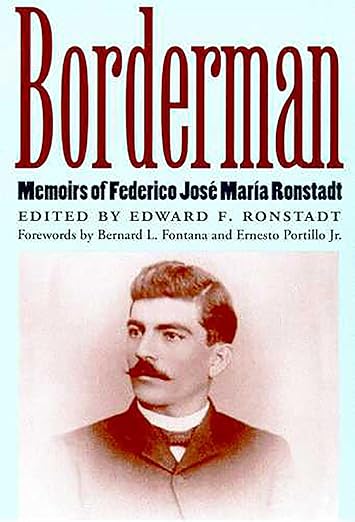
"Borderman: Memoirs of Federico José María Ronstadt"
Famed Singer Linda Ronstadt Is The Granddaughter of Federico
Life in 1882 Madgalena at Age 14
Federico ("Fred") José María Ronstadt (1868-1954)
By this time my father [Frederick Augustus Ronstadt] had been called by Governor Don Carlos Ortiz to Hermosillo where he offered the office of Perito de Minas, mining advisor, for the District of Magdalena. The duties of that office were to issue title on mines, survey the claims, direct the works, and inspect the mines twice a year to see that operations were conducted according to law and the safety of the miners. The fees for this work averaged better than $500 per month. My father accepted this appointment and decided to take us to |49| Magdalena as soon as we could rent or sell the orchard & farm [outside Altar] .... |50|
On his way home from Hermosillo during a stormy night the stage was upset while fording a flooded part of the road near Santa Ana. My father, with the other passengers, suffered from exposure in the cold water and developed a serious case of fever and other complications that nearly took his life.
Magdalena had no hospital or any other facilities so my father sent his driver to Altar to bring me over to help. There was not a doctor in Magdalena. A drug store owned by an old American druggist, Don Alejandro Clark, furnished the only medical aid possible. My father's case required changing hot flax seed poultices for several days and nights and this was my work.
When he recovered enough to leave his bed, he rented a house from Don Pancho Gallego. While the place was made ready, he sent me to Altar after my mother and the children, Dick, Emilia, and Pepe. I drove my father’s mountain road wagon, the type made on four springs, two seats for six passengers and a good storm top with side curtains. The two horse team made the 60 miles from Magdalena to Altar in two short days. As my mother was ready, we loaded as much of our things as could be packed in the road wagon, trunks and bedding on the trunk rack in the back, and started for Magdalena. We made El Ocuca before night. El Ocuca was the original settlement of the first Redondo that came to Mexico from Spain, my mother's great grandfather. ... |52|
It was not long before the young people of Magdalena discovered that I could play the flute. Santiago Campbell, a boy whose father was an old friend of my father, played the guitar. We practiced a repertoire of the pieces that I knew by heart, songs, danzas, serenades, waltzes, mazurkas, schottisches, polkas, etc., and in a few |53| weeks we were able to furnish flute and guitar music for our friends' parties and serenades. Of course we were in demand and these few months of my stay in Magdalena were certainly very happy ones.
My father bought a large lot with an old house that was rebuilt for us and we were soon settled in a home of our own. We had a nice patio and garden and a large “transcorral”- back yard and stable. My father had a good saddle horse and his two horses for the road wagon.
While I was 14 years old and my schooling had been very limited, there was no chance in Magdalena as the public school was a very poor one and only for small children of the first grades. So my time was occupied by helping my father. I would go with him on his trips of inspection to the mines. Many beautiful spots were visited on these trips. I will never forget a few days we stayed at the Aguaje Canyon near a mine which my father was inspecting. I had nothing to do but shoot with my father's engraved Winchester and tramp over the canyon, resting as I desired under the aliso's [alder's] shade by the crystal like water flowing over the rocks.
While in town I used to ride my father's saddle horse to San Ignacio and down the Magdalena River to San Lorenzo and Santa Ana. I had a favorite “ondable,” “water hole,” north of the town where I could swim.
The idyllic life could not last forever. .. |54| Both [my father and mother] finally compromised on sending me to Tucson where Mr. [Winnall] Dalton and his brother-in-law, Adolfo Vasquez, were operating a carriage shop. The carriage and wagon industry was a major one in those days and my parents decided that I could do well in that line. Mrs. Dalton was my mother's cousin, and I was to live at their home while serving my apprenticeship.
While waiting to be taken to the U.S., I occupied my time hunting rabbits, doves, and quail in the foothills near Magdalena. I also made some stools and benches for my mother at the carpenter shop of our neighbors Alberto and Alejandro Barreda. Mrs. Barreda’s maiden name was Elias of the old Elias family, founders of the town of Arizpe from which know at the present day, Pancho Elias, ex-governor of Sonora, and one of ex-President Calles' right hand men. One of our great grandmothers was an Elias and my mother always recognized these blood relations and we were taught to know them as “parientes” (relatives) in the well established Spanish custom. A “pariente” even in the fourth or fifth degree is a blood relative and must be recognized as such. Therefore about half of the people of Sonora are descendants from the Redondos, Vasquez, Urreas, and the Eliases. We have an army of blood relatives (“parientes”). ... |55|
In Magdalena I worked in the wagon and carpenter shop of Don Manuel Martinez, whose shop was located in part of the large home of the Monroys. Rafael Monroy married a cousin of my mother, Chonita Redondo, and as they were also related to the Gallego family ... |56|
A few weeks after that my father started with me for Tucson. Our driver was Juan de Dios, the same man that my father had for all of his mining trips. The first stop was made at Las Casitas. The Santa Fe R.R. Co. was building the road from Guaymas to Benson. They had a camp of men cutting railroad ties along the road from Imuris to Nogales. As a matter of fact, there was not any Nogales then in April of 1882. ... |57|
As I grew up in Tucson, I was undecided about my ultimate location. My mother had considerable property in Sonora. Some town houses, a very fine farm near Magdalena with its own gravity water, also title rights to two very large cattle ranches in the Magdalena District .... which would come to us. ... These pending matters in Mexico together with claims of my father's estate against the Mexican government |83| for unpaid salaries made me vacillate about applying for American citizenship. In time, however, we made disposition of the farm lands and houses. ... The large claim against the Federal Government was never cleared up ... When these matters were out of the way, I promptly applied for citizenship to carry out my dream and ambition of years. Soon after I was naturalized I enlisted in the National Guard of Arizona. ...
|184|
Federico ("Fred") José María Ronstadt
Excerpt from "Borderman: Memoirs of Federico José María Ronstadt"
Edited by Edward F. Ronstadt
Forewards by Benard L. Fontana and Ernesto Portillo, Jr.
Editor Note: After moving to Tucson from Magdalena in 1882 at the age of 14, Fred Ronstadt (1868-1954) became one of Tucson's prominent citizens and businessmen and in his early years was Tucson's outstanding musician and band leader.
Fred’s mother Margarita Redondo y Vásquez was a member of a well-known and widely respected family in Sonora. Fred's father was Frederick Augustus Ronstadt (1816-1889), a German mining engineer, who immigrated to Mexico where he became a naturalized Mexican citizen. Frederick Augustus worked in the mining industry in addition to serving in various positions in the Sonoran state government including, at one time or another, being military prefect of every district in Sonora. He also served for 23 years as a colonel in Sonoran National Guard. The last time that Fred's family lived in Magdalena was from 1882 to 1887. Margarita and Frederick Augustus left Magdalena to move to Tucson to be taken care of by Fred in their old age.
The entire book "Borderman: Memoirs of Federico José María Ronstadt" can be downloaded for free, courtesy of the University of Arizona Press, from the internet at https://www.jstor.org/stable/j.ctt180r1sj. It is easy to create a free JSTOR individual account, if you are not associated with an institution.
Edward F. Ronstadt, who edited his father Fred's memoir, was what would now be called a “civilian diplomat.” Ed promoted borderland friendships through the promotion of the shared history and culture of the borderland states of Sonora and Arizona by tours of Padre Kino’s missions and his leadership in many historical and cultural organizations in Arizona. Ed Ronstadt took his 14 year old son Bobby Ronstadt to Magdalena from their home in Tucson within a day or two of the discovery of Kino’s grave. Ed Ronstadt wanted his son to personally witness this great and long anticipated historic event.
Ed made a major contribution to preserving the history of the Kino grave discovery. He helped Jorge Olvera, one of the leading archeologists, in the publication of Jorge’s book "Finding Father Kino: The Discovery of the Remains of Father Eusebio Francisco Kino, S.J. 1965 -1966" that was later published in Spanish as - “Econtré los restos ye el espíritu de Kino: Mi diario de campo 1965-1966.”
Fred's granddaughter, Linda Ronstadt, is one of the world's greatest female vocalists. Her music career spans many musical genres from rock & roll to opera. Linda was born in Tucson with close relatives living on both sides of the border of Sonora and Arizona. In her album "Canciones de Mis Padres" Linda sings in Spanish the favorite songs of her family. The "Canciones" album is the biggest-selling non-English-language album in U.S. music history. A "Canciones" Live Performance, produced by PBS's Great Performances series, can be viewed with the song lyrics in English subtitles at https://www.youtube.com/watch?v=FsZHRkV-R3Q.