Sor Juana Inés de La Cruz
Poem About Padre Kino
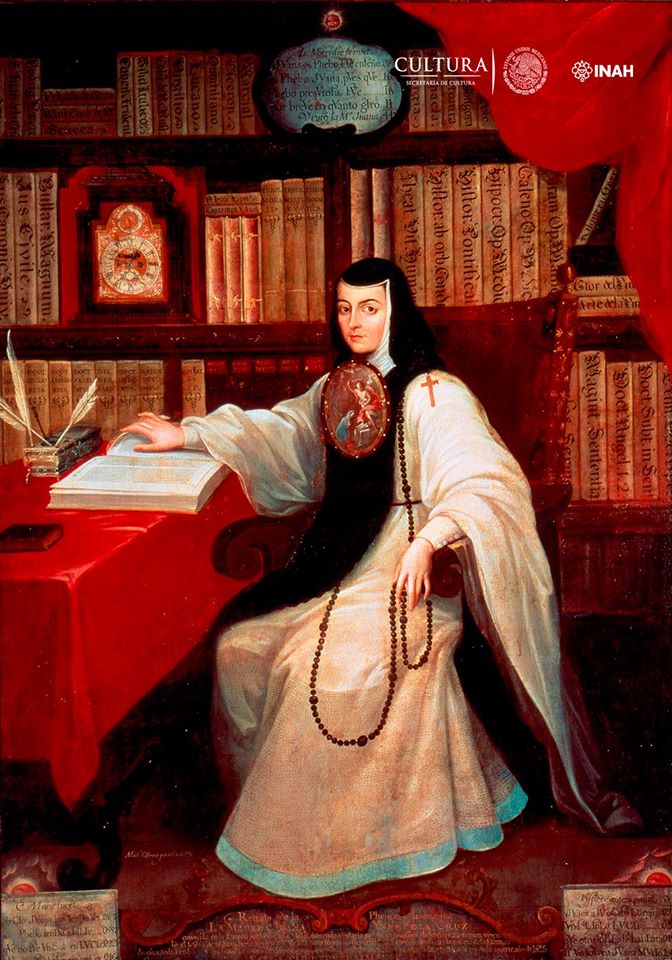
Sor Juana Ines de La Cruz
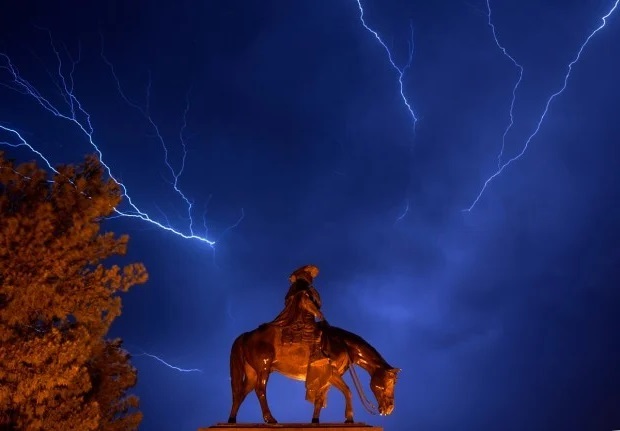
Life Section Page Links
Website Page Links
- 'Home Page
- 'Page Index
- Best Concise Biography
- Best Book El mejor libro sobre Kino
- Best Book Entire Online English
- Best Book Guide Section Page
- Best Book Reference Map & Timeline Links
- Best Book^ Online Table of Contents
- Best Book^ C01 California Mission
- Best Book^ C02 Indians Not Slaves!
- Best Book^ C03 Among The Pimas
- Best Book^ C04 Young Lieutenant
- Best Book^ C05 Blood of a Martyr
- Best Book^ C06 Vengeance!
- Best Book^ C07 Children Ask For Bread
- Best Book^ C08 Error in the Map
- Best Book^ C09 Devil's Highway
- Best Book^ C10 Visit from Salvatierra
- Best Book^ C11 Plan for New Spain
- Best Book^ C12 General Manje Writes Report
- Best Book^ C13 Francis Xavier Chapel
- Best Book^ C14 Best Book Index
- Best Book^ C15 Author Bio & Note
- Biografía de Eusebio Francisco Kino
- Biografia di Eusebio Francisco Kino
- Biography of Eusebio Francisco Kino
- Builder Architect
- Cabalgata Rides 01
- Cabalgata Rides 02
- Cabalgatas Section Page
- California Builder
- California Founder
- Cartographer
- Cross References To Books
- El romance del Padre Kino Book
- Europe Son
- Expanded Table of Contents
- Explorer
- Explorer Baja California Gulf of California
- Explorer Colorado River and Delta
- Explorer Pinacate & Gran Desierto
- Explorer Sonora Arizona
- Farmer Rancher
- Favores Celestiales Bolton
- Friend and Defender
- Grave Discovery Chapel
- Grave Discovery History
- Grave Discovery Olvera Account
- Historian
- Horseman
- Jesuit Exemplar
- Jesuits on the Pacific Bolton
- Kino Biography
- Kino Heritage
- Kino Life
- Kino Life Summary Maps
- Kino Resources
- Kino Wheat
- Letters To Duchess Aveiro
- Literature Bibliography
- Magdalena de Kino - Trails End
- Magdalena Pilgrimage
- Mission San Xavier del Bac Statue Guide
- Missionary Father
- Multimedia Online
- National Parks and Heritage Areas
- O'odham People
- Pageant Play "Bell and Plow"
- Remembrances on the Trail
- Ride for Justice History
- Ride for Justice Journeys
- Sainthood Cause
- San Cayetano Tumacacori
- San Xavier del Bac
- Scientist
- Segno - Birthplace
- Sor Juana's Kino Poem
- Sortillion^ C01 El Joven Kino
- Sortillon Kino Website
- Statues Monuments
- Test Page
- Testimonials
- Timeline
- Tumacacori
- U.S. Capitol Statue Section
- U.S. Statue Burrus Dedication
- U.S. Statue Hayden Acceptance
- U.S. Statue Silver-Cruys Sculptor
- U.S. Statue Udall Interior Secretary
- U.S. Statute Goddard Presentation
- U.S. Statute Green Invocation
- Website Page Index Annotated
Soneto
por Sor Juana Inés de la Cruz
Sonnet
by Sor Juana Inés de la Cruz
Aplaude La Ciencia Astronomica Del
Padre Eusebio Francisco Kino,
De La Campania De Jesus,
Que Escribio Del Cometa
Que El Ano De Ochenta [1680]
Aparecio, Absoiviendole De Ominoso
Praising The Astronomical Science Of
Father Eusebio Francisco Kino
Of The Company Of Jesus,
Who Wrote About The Comet That Appeared In 1680,
Absolving It Of Evil Portent
Aunque es clara del Cielo la luz pura,
clara la Luna y claras las Estrellas,
y claras las efimeras centellas
que el aire eleva y el incendio apura;
aunque es el rayo claro, cuya dura
produccion cuesta al viento mil
querellas, y el relampago que hizo de sus
huellas medrosa luz en la tiniebla obscura;
todo el conocimiento torpe humano
se estuvo obscuro sin que las mortaies
plumas pudiesen ser, con vuelo ufano,
Icaros de discursos racionales,
hasta que el tuyo, Eusebio soberano, les dio luz alas Luces celestials.
Sor Juana Ines de la Cruz, Obras Completas, (Editorial Parma, S.A., 1972) 163.
Although heaven's pure light is bright, bright the moon and bright the stars, and bright are the fleeting lightening flashes that are borne by the air and sped by fire;
even though lightening is bright, its laborious production costs the wind a thousand discords, and the flash produced in its path is a dreadful light in gloomy blackness;
all dull human knowledge is obscure without mortal plumage being able to be,
with proud flight,
Icarian in rational discourses, until yours,
superb Eusebio, you brought light to the celestial lights.
Translated by Fred McAninch. The original Spanish sonnet can be found in Sor Juana Ines de la Cruz, Obras Completas, (Editorial Porrua, SA, 1972) 163.
Print Poem in Spanish and English, click Poem
Letter From Royal Audencia to Father Kino 1705
The hopes that your Reverence may make a journey to Mexico [City] have comforted me greatly. I imagine I see you there already, as on the former occasion, like a lightning-flash, quick and refulgent, but without destruction …
Don Joseph de Miranda Villa y San
Royal Audiencia of Guadalajara,
Letter to Kino dated March 31, 1705
In "Kino's Historical Memoir of Pimería Alta; A contemporary Account of the
Beginnings of California, Sonora, and Arizona" [Vol. 1] 1919
Dr. Herbert E. Bolton, Translator and Editor
Commentary by Octavio Paz
"Examining Sor Juana's library allows us to understand better her sonnet "in praise of the astronomical science" of Father Eusebio Kino. In it she refers to the Jesuit's writings on the Comet of 1680 that had excited Europe and the America.
Among the few persons in Mexico to whom Father Kino sent his "Exposition" was Sor Juana. Her response was a sonnet (205) in which she places him, literally, above the comets, that is, in the incorruptible highest heavens. Sor Juana capped her praise by saying that the "heavenly lights received light' from Kino's learning.
[Seventeenth century New Spain] was … the century of missionaries like Father Kino, mystics like Catherine Suárez, and ascetics like the Archbishop of Mexico, Francisco Aguiar y Seijas and Father Antonio Núñez de Miranda, Sor Juana's confessor. [Sor Juana] was visited by and sought after by high officials, ladies of nobility, military men, homilists and illustrious travelers like Father Kino."
Octavio Paz
"Sor Juana Inés de la Cruz, o, Las trampas de la fe"
1982
"Sor Juana, Or, the Traps of Faith"
English translation by Margaret Sayers Peden
Commentary by Dr. Jorge Olvera
"Sor Juana was well aware that more important than trivial scholarly disputes was the fact that Kino was not only giving light to the under standing of astronomy, but he was about to give his entire life in a stronger light to a better cause as a missionary. His was to be the cause of the poor and forsaken tribes of the northern deserts, even as Christ had given his life to enlighten the world, which was in darkness. This is what the poem is about: light and darkness. It has a dramatic connotation, one which evokes the darkness that took place at the time of the crucifixion of Christ, with the lightning, thunder, and furious wind breaking through. All dull and vile knowledge says - Sor Juana - came a standstill. No pens of mortals could rise proud in Icarian fashion with rational discourses until yours, Eusebio, gave illumination to those heavenly lights. (Here I am trying to convey the inner sense of the poem.)
If this poem were only praising Kino the man, it would have been hyperbolic and idolatrous. Sor Juana evidently meant that Kino was giving forth a greater light by his apostolic example, saying at the same time that his observations were enlightening. All this is presented in the beautiful, metaphorical way possible only in poetry.
The poem is in the very style of Sor Juana, one which conceals hidden meanings. She dedicated the lines to Kino when she knew he was about to leave the comforts of the civilized world - perhaps forever for the dangerous and unknown deserts on the Rim of Christendom."
Dr. Jorge Olvera H.
"Finding Father Kino: The Discovery of the remains of Father Eusebio Francisco Kino, S.J. 1965-1966"
Commentary by Cesar Arturo Andrade Valle
The sonnet is dedicated to Jesuit priest, the Italian Eusebio Francisco Kino. Father Kino was a remarkable priest, who devoted himself to missionary work among various indigenous populations. During the 1680s he arrived in Mexico, almost by accident. His original destination was China, but having missed his ship, he stayed for a while in Cadiz, learned Spanish and then made his way to the Americas.
He worked as a tireless priest, and he is still remembered as the “Padre on Horseback,” for his long missionary journeys. Sor Juana being a deeply religious woman, she undoubtedly admired Father Kino's devotion, as well as his love for indigenous people. This is what the Tenth Musa celebrates in her sonnet. The poem is a great analogy between the forces of nature (light and dark) and the beauties of human knowledge. In both quartets she alludes to the cosmos, to light and to the dark. Then, in the third, she establishes implicitly a comparison of those elements with human knowledge.
In the first eight verses the lyrical voice describes the cosmic battle between clarity and gloom. Light is plentiful, but darkness is also plentiful. Notice the concessive "though" conjunction, with which the sonnet is opened, and it is repeated anaphorically at the beginning of the second stanza.
In the first quartet clarity, light, imposes darkness, although its triumphs are ephemeral. “... The light is clear from the sky... , clear moon, clear stars... ”. So far the epithets are dazzling but soon, albeit subtly, the darkness is marking an increasingly difficult contrast to disguise. The light is noticeable, but fleeting: “ephemeral sparks that... , the fire is rushing.”
In the second quartet, the battle of light, its effort not to extinguish itself in the depths of darkness, acquires epic dimensions: “... the clear lightning, whose hard [understandably difficult] production, costs the wind a thousand disputes.” Notice the hyperbolic character of the tone, as well as the use of personification to highlight the light's battle not to disappear. This quartet closes with the momentary flash of "lightning that made their footprints frightening light... ”. The last syllables are dramatically lost "in the dark." Notice the contrasting epithet and emphasis with relation to the initial light images. Now it seems the darkness has drowned out the light.
As a whole, the sonnet is an univeral analogy and a paradox. The first comparative element has been woven in the quartets, which is the light about to perish in darkness. Now, in the third we will find the second comparative element. "The light in the darkness shines," states the Gospel of John. This is the sense of analogy that the lyrical voice profiles in the poem.
The first third insists on the fruitless, albeit epic, battle of light. From this verse, light is revealed as a metaphor for knowledge. Sister Juana alludes to Greek mythology that, although beautiful, never managed to flutter forever. Light (knowledge) is presented in two levels, the human and the divine. The first is symbolized through Greek myth and the second in the evangelical preaching of Father Kino.
The light of human wisdom is inefficient: “All clumsy human knowledge, /has gone dark.. ”. The failure of human wisdom, light, is symbolized by the failed flight of Dedalus' son, Icarus... "without mortals, / feathers could be, with an flight, / Icarus of rational discourse... ”. Here the sonnet reaches a poignant climax, drawn by the death of Icarus at sea.
The moment is dramatic, but it is resolved through a paradoxical outcome. The outcome is, in addition, a panegyrical to the missionary work of Father Kino. “... Until yours [to your flight], Eusebius sovereign, / gave them to the lights, heavenly lights.
Note, in conclusion, the suggesting contrast between the flight of Icarus and the flight of Kino. The first is a metaphor for failure, the light diluted in the darkness. The second is the metaphor of triumph, the light of the triumphant Gospel through the preaching of Kino. The closing of the sonnet sings the victory of faith over the dark chaos of doubt and human knowing.
Cesar Arturo Andrade Valle
Sor Juana’s Birthday
November 13, 2025
Original Facebook Post in Spanish at
https://www.facebook.com/cesararturo.andrade.5/posts/pfbid02pAHVysnaNEQEf8RwDyK6HTWKF4UXE4mqPy7iiPqhpRLHprjzAb85WfCKc1PEDcxVl
Editor Note: Cesar Arturo Andrade Valle is a member of the visitors center of the municipality of Magdalena de Kino. His beautiful and insightful interpretation of Sor Juana's poem is one of the best that I have read. My hasty English translation is based on Google from the original Spanish. My apologies to the author.
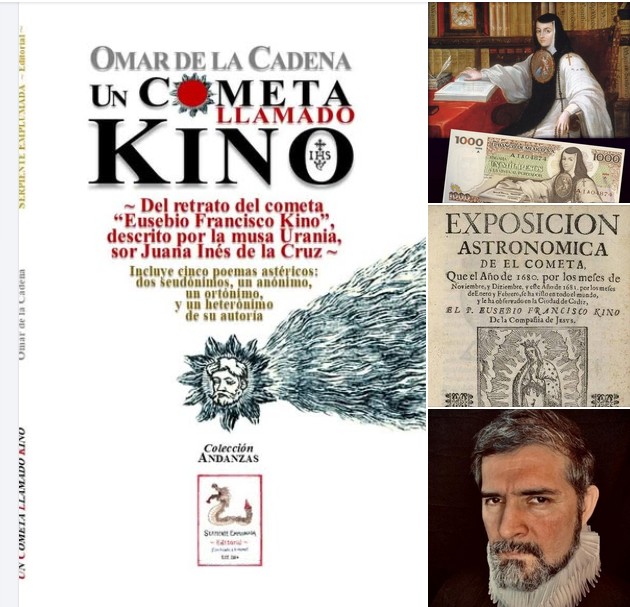
Un Cometa Llamado Kino
Image From the Review of This Ground Breaking Book
Mark O'Hare
Book Review
Un cometa llamado Kino: del retrato del cometa, “Eusebio Francisco Kino,”
descrito por la Musa Urania, Sor Juana Inés de la Cruz” 2025
Omar de la Cadenas - Author
Ground Breaking New Book By Omar de la Cadena Explores the Friendship Between Padre Kino and The World Famous Renaissance Woman Sor Juana Inés de la Cruz and The Influence That Their Relationship Had on Each Other's Writings in His Recent Book “Un cometa llamado Kino: del retrato del cometa, “Eusebio Francisco Kino”, descrito por la Musa Urania, Sor Juana Inés de la Cruz” [“A Comet Called Kino: From the Portrait of the Comet “Eusebio Francisco Kino, Described by the Muse Urania, Sor Juana Inés de la Cruz.”]
The title of Omar’s book and the drawing on its cover refers to one of Sor Juana’s poems written in 1681 while Kino was first visiting Sor Juana in Mexico City. In this poem Sor Juana portrays Kino as comet with its head having a sparse beard and its tail having long hair. Omar de las Cadena presents in depth the relationship between Sor Juana and Padre Kino, and is the first to explore the inspiration their friendship had on each other's literary works. In his 150 page book, Omar in analyzing their writings shows that Sor Juana and Kino not only read each other’s writings, but they also quoted from and had similar phrasing in each other’s writings, in addition to their use of themes drawn from their mutual love of astronomy.
In June of 1681, Padre Kino at age 36 arrived in Mexico City to begin his 30 years of service in the mission frontier in today’s Mexico and the state of the U.S. state of Arizona. Kino first lived in Mexico City for 4 months before leaving for his assignment as a missionary and royal cosmographer in today’s state of Baja California Sur.
During this first stay in Mexico City, Kino became friends with the world famous Sor Juana Inés de la Cruz (1651–1695). Sor Juana was a Roman Catholic nun and was a self-taught Renaissance polymath. She is known as one of the greatest writers in all of Spanish literature and her works were published in Madrid during her lifetime. In addition to being a prolific poet and playwright, she was the author of a powerful essay defending the intelligence of women and their right to received and teach in formal educational settings. Also she was a scientist who regularly corresponded with other scientists in Europe including Issac Newton. More about Sor Juana below.
Kino’s treatise on the Great Comet of 1680 was published under the title “Exposición astronomica del cometa” [Astronomical Exposition of the Comet]. The center right image is a detail of the book's title page. Kino's treatise was one of the first scientific works published in the New World. The title page and Kino’s detailed sky chart showing the daily positions of the comet in the night sky featured Kino’s drawings of Our Lady Of Guadalupe. Kino's copied the miraculous image of Our Lady of Guadalupe that was impressed on the cloak of Juan Diego. Among Kino's many claims to fame is that he was one of the earliest Guadalupanos with his strong devotion. Kino named the first mission that he established in Our Lady of Guadalupe’s honor. That mission was located in today's La Paz, Baja California Sur. Omar de la Cadena relates how Kino was influenced in his comet treatise by the writings of Sor Juana.
Omar's book breaks new ground in its literary analysis on how Kino’s comet treatise influenced the development of Sor Juana's poetry including her 1692 magnum opus poem “Primero sueño y otros poemas transmundanos [The First Dream and Poems of Other Worlds]. Kino was able to have profound and intellectually deep discussions with Sor Juana because he had a background not only in the sciences but also literature. As part of his Jesuit training, Kino returned as a teacher to the Jesuit college preparatory school that he graduated from and taught literature and rhetoric there for three years. Kino and Sor Juana continued their friendship and discussions during Kino’s second stay in Mexico City in 1686, the five months before he was assigned to the Pimería Alta.
Kino’s immediate influence on Sor Juana during his first stay in Mexico City is shown in the series of poems that she wrote between 1681 and 1683 under the name Urania, the muse of astronomy. In these poems Sor Juana anthropomorphizes the stars shown in Kino’s image of Our Lady of Guadalupe as a framework to praise the power and beauty of nature while reflecting on the internal struggles suffered by humans. Omar's book details how Kino’s astronomical treatise influenced Sor Juana by her use of Kino’s phrasing in these series of poems.
Sor Juana wrote a poem specifically about Kino with the famous lines "Although … bright are the fleeting lightning flashes … Superb Eusebio, you brought light to the celestial lights." To view Sor Juana’s entire Kino poem in its original Spanish and English translation along with commentary by Octavio Paz, see https://padrekino.com/index.php/khs_home/kino-life/sor-juanas-kino-poem. More than 20 years later a member of the Royal Audiencia of Guadalajara alluded to Sor Juana’s poem in 1705 letter to Kino when he describes Kino “like a lightning-flash, quick and refulgent, but without destruction …”
Today Sor Juana is known and revered for her wisdom, wit and genius, and her courage to speak out for the cause of women. Sor Juana’s name is inscribed in gold lettering on the wall of honor in the chambers of the Mexican Federal Congress. Also Mexico honors her by having her image appear on various denominations of currency bills and coins over the past decades.
In the United States the Episcopal Church, in 2022, added a feast day in her honor to its liturgical calendar. Her feast day is April 18, the anniversary of the day after she died in 1695 while caring for victims of plague. See more about Sor Juana’s life and the “audacious beauty” of her writings as described by Octavio Paz at https://projectvox.org/sor-juana-1648-1695/
Author and editor Omar de la Cadena is a man of letters in its finest tradition - perhaps one of the last men of letters remaining in the world. He has expert knowledge of the world’s culture and literature and is a prolific author himself known for his wit, erudition, and skills as an educator. He works in all genres of writing including poetry, essay, fiction and non fiction including human and natural histories. Also Omar is an editor and its role as a “writing coach” at VÉRTICAL Digital, a publishing house that primarily serves authors living in the borderlands of Sonora and Arizona. Omar is pictured in the lower right image as a man of letters living in the times of the Renaissance - the time of Kino and Sor Juana.
Among the books written by Omar are “Imagen sucesiva”, La jaula de catorce versos”, “Sobre la arena del desierto” and his most recent book “La vuelta a la mesa en ochenta libros.”
I know of no other writer that has researched in the depth the relationship between Sor Juana and Kino, nor analyzed the impact each had on the other's literary works as Omar de la Cadena has in his groundbreaking book "Un cometa llamado Kino".
Congratulations Omar on the publication of your book about the friendship of our beloved Sor Juana Inés de la Cruz and our heroic Padre Eusebio Francisco Kino and how they inspired each other.
“Un cometa llamado Kino” (A Comet Called Kino) by Omar de la Cadena is published by Serpiente Emplumada and is available through Amazon and in the Serpiente Emplumada bookstore that can be contacted via WhatsApp at 662 414 2821.
#PadreKino #venerablekino #sorjuanainesdelacruz
Eusebio Kino's post
July 13, 2025
https://www.facebook.com/eusebio.kino.56/posts/pfbid02UqWAtcmgavq9HpRhmWhqFJ6gKDu1q6ExKNg2V6Xv4g55SRkAkcJ17UEfRrEsE6vcl
Editor Note: The book review appeared on the Facebook post of Eusebio Kino on July 13, 2025 at https://www.facebook.com/eusebio.kino.56/posts/pfbid02V1fBBm3RQVAbPNcp6gv36S89ry7AeyLzUvViRpDtpiWwfNTsFqngG3JaVmXbEy9bl
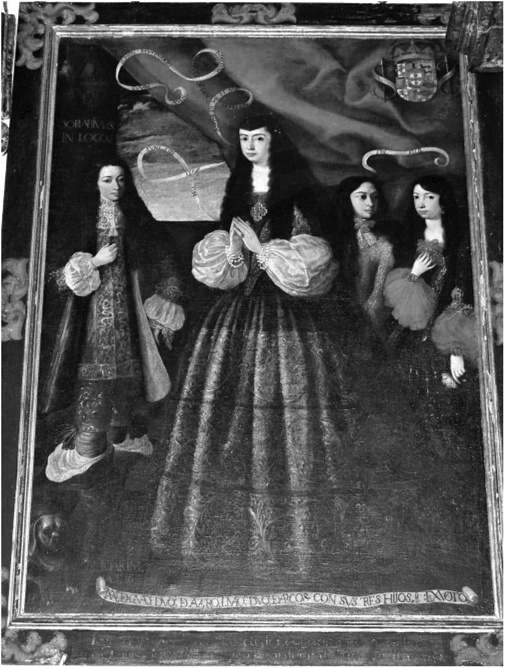
"Mother of The Missions"
María de Guadalupe Duchess de Lencaster, 6th Duchess of Aveiro and Children
Painting Attributed to Artist Cerreño Miranda - 1682
Sor Juana Inés de la Cruz
Sor Juana Writes About The Duchess
“Romance” Number 37 Poem
La respuesta a sor Filotea” [Response to Sister Filotea]
To read about Sor Juana's praise of the Duchess of Aveiro, click on website's page "Kino Writes The Duchess" at
https://padrekino.com/index.php/khs_home/kino-life/letters-duchess-averio
Also read online on the "Kino Writes The Duchess" webpage the chapter "Sor Juana as Panegyrist: In Praise of Doña María de Guadalupe de Lencastre" about Sor Juana's Poem Romance Number 37 in Margo Echenberg's book "The Fame of Sor Juana Inés de la Cruz Posthumous Fashioning in the Early Modern Hispanic World"
Ernest J. Burrus
Sor Juana's Poem "Romance" Number 37
The Mexican Poetess, Sor Juana Inés de la Cruz (1651-1695), wrote at the insistence of the Condesa de Paredes, wife of the Mexican Viceroy (1680-1686), a poem of one hundred and twenty lines in honor of the Duchess. The briefest of outlines must suffice here. After extolling her beauty, learning, literary talents and high nobility, the Poetess reminds the Duchess that flattery and self-seeking are not the motives of her poetic effusion. In a delightful parenthesis Sor Juana dilates on the natural resources and bounty of the New World. She then returns to the motive for writing the poem in her honor. This she finds in the Duchess's generosity to the missionaries and her zeal in promoting the Faith; the Duchess's goodness merits the gratitude expressed through the lines of the Poetess. The Spanish edition of the present correspondence reproduces the entire poem of Sor Juana.
Ernest J. Burrus
III. The Duchess: A Biographical Note
Kino Writes to the Duchess:
Letters of Eusebio Francisco Kino, S.J., to the Duchess of Aveiro
"Mother of The Missions"
María de Guadalupe Duchess de Lencaster, 6th Duchess of Aveiro
Ernest J. Burrus
For nearly half a century she [the Duchess assisted the missionaries and inspired them to write numerous reports and personal letters, which, despite the toll of time, still constitute a vast fund of |20| historic, geographic, ethnologic and other scientific data. She not only sent missionaries across the oceans, built and maintained seminaries, she also encouraged and financed the publishing of learned works on mathematics, theology, literature, natural sciences, etc. Her home in Madrid became the information center for the foreign apostolic work effected by missionaries from every country of Europe and of the mission areas themselves. “Mother of the Missions” was not an empty but a well-deserved title. She herself summed up her ambition in life and the times - when she said that she hoped to build as many Catholic churches as Elizabeth of England had destroyed or confiscated.
Ernest J. Burrus
III. The Duchess: A Biographical Note
Kino Writes to the Duchess:
Letters of Eusebio Francisco Kino, S.J., to the Duchess of Aveiro
Editor Note: Kino's letters to the Duchess gives great insight into the mind and soul of our heroic padre. More about Kino and The Duchess on the website's page "Kino Writes The Duchess" at https://padrekino.com/index.php/khs_home/kino-life/letters-duchess-averio
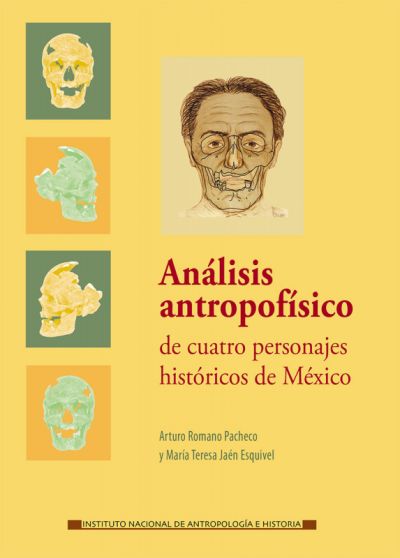
Analysis of Remains and Cranial Morphology of Padre Kino and Sor Juana
Arturo Romano Pacheco and María Teresa Jaén Esquivel
Análisis antropofísico de cuatro personajes históricos de México
Skeletal Remains of Padre Kino and Sor Juana
Discovery By Arturo Romano Pacheco
The same physical anthropologist - Dr. Arturo Romano Pacheco - discovered both the skeletal remains of Padre Kino and Sor Juana Inés de la Cruz. Dr. Romano was the team leader that discovered the skeletal remains of Padre Kino in Magdalena, Sonora in May 1965 and the skeletal remains of Sor Juana in November 1978 in Mexico City. From 1974 to 1981 Dr. Romano directed excavations in the church of Sor Juana's convent of San Jerónimo.
Dr. Romano (1921-2015) was the director of the Physical Anthropology Department of INAH. Also he was the leading forensic scientist in Mexico, aiding in the solving of murder cases and other crimes.
As co-author of the book "Análisis antropofísico de cuatro personajes históricos de México" [Anthropophysical analysis of four historical figures from Mexico], Dr. Romano uses the methods and techniques of physical anthropology and forensic science to analyze the skeletal remains of both Padre Kino and Sor Juana with insights into their cranial morphology, health and activities. The other two historical characters examined in the book are a Mexica warrior and Miguel Ramos Arizpe.
For information on the discovery of Padre Kino's remains and grave, begin by clicking on the first of three website pages at https://padrekino.com/index.php/khs_home/kino-heritage/kino-grave-discovery